
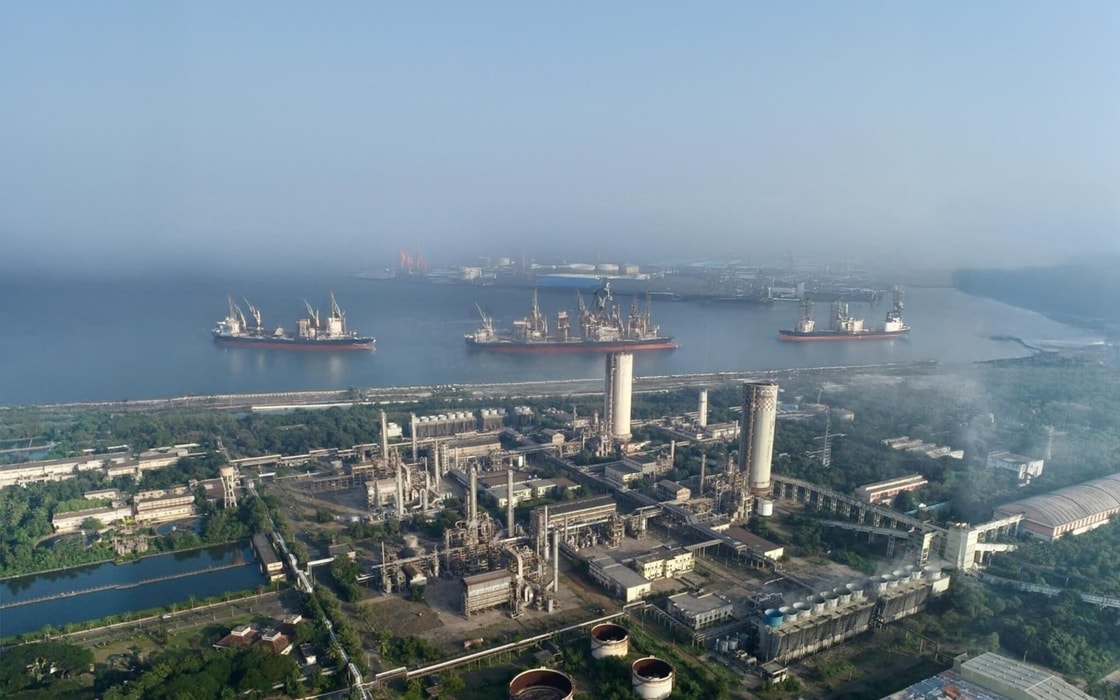
Under a binding agreement, Am Green will supply up to half of the green ammonia produced at its facility in Kakinada, with first deliveries expected by early 2028.
Uniper green ammonia will be used as a feedstock and potential hydrogen carrier to decarbonise chemicals, fertilisers and other hard-to-abate industrial sectors.
The deal was formalised in Ahmedabad, in the presence of German Chancellor Friedrich Merz and Indian Prime Minister Narendra Modi.
Michael Lewis, CBE, CEO of Uniper, said the contract would help unlock cost-effective decarbonisation.
“Green ammonia stands out as one of the most promising solutions to decarbonise CO2-intensive production of chemicals, [and] fertilisers…through green hydrogen”.
The AM Green project reached final investment decision last year, with plans to bring up to one million tonnes of annual production online by 2026, primarily for export to Europe.
With an increasing amount of low-cost renewables, India has been positioning itself as a key green hydrogen and derivative supplier for Europe, which has been turning its focus to imports amid wider domestic hydrogen setbacks.
AM Green is also exploring supplying German chemicals major BASF with up to 100,000 tonnes of green ammonia produced in India, along with 250,000 tonnes for power firm RWE.
If the project and subsequent deals move ahead, it could be the first example of large-scale green ammonia trade between Europe and India.
However, it comes after warnings from Indian officials that indecision on European green hydrogen could hamper projects.
Speaking in Brussels last year, Oman and India warned shifting regulations, like the bloc’s renewable fuels of non-biological origin (RFNBO) rules, would undermine projects already under development.
Analyst Wood Mackenzie recently predicted European developers would largely shift away from RFNBO projects in favour of the easier-to-implement Low Carbon Fuels Delegated Acts, which permit electrolytic hydrogen to be produced from non-renewable power.
Wood Mac expects prospective clean hydrogen exporters to adopt a “hybrid approach” to produce RFNBO and non-RFNBO hydrogen to split supply between different offtakers.
Join the conversations shaping hydrogen
H2 View webinars bring together industry leaders to discuss the hottest topics and biggest trends.
With H2 View webinars, you’ll get:
• Insightful talks from global hydrogen experts
• Live debates, discussion, and audience Q&A
• On-demand access to every past webinar
Register for upcoming webinars or watch on demand