

Newly appointed CEO Jean-Baptiste Lucas said the automaker’s sudden exit from hydrogen fuel cell development came as a “shock” to Symbio’s 640 employees.
The company had scaled up rapidly to meet anticipated demand, including opening a 50,000-unit-per-year gigafactory in Lyon, France.
Stellantis became a one-third shareholder in Symbio in 2023 alongside Michelin and Forvia, aiming to support the rollout of hydrogen-powered light commercial vehicles (LCVs) across Europe. That vision has now collapsed.
Symbio’s other co-owners, Michelin and Forvia, say they were only officially informed of Stellantis’ withdrawal in May. Forvia posted a €269m ($311m) net loss in H1 2025, with €136m ($157m) write-down tied to Symbio.
Michelin has posted a €140m ($162m) provision to cover its exposure to Symbio.
“No company had ever deployed such technologies at this scale and with such industrial maturity in such a short time,” Lucas said. “It is inconceivable that all of this could be wiped out.”
Symbio said in a statement that it had made “every effort” to meet performance and cost criteria defined by Stellantis for its hydrogen LCVs, which represented a “major share” of Symbio’s 2025 order book.
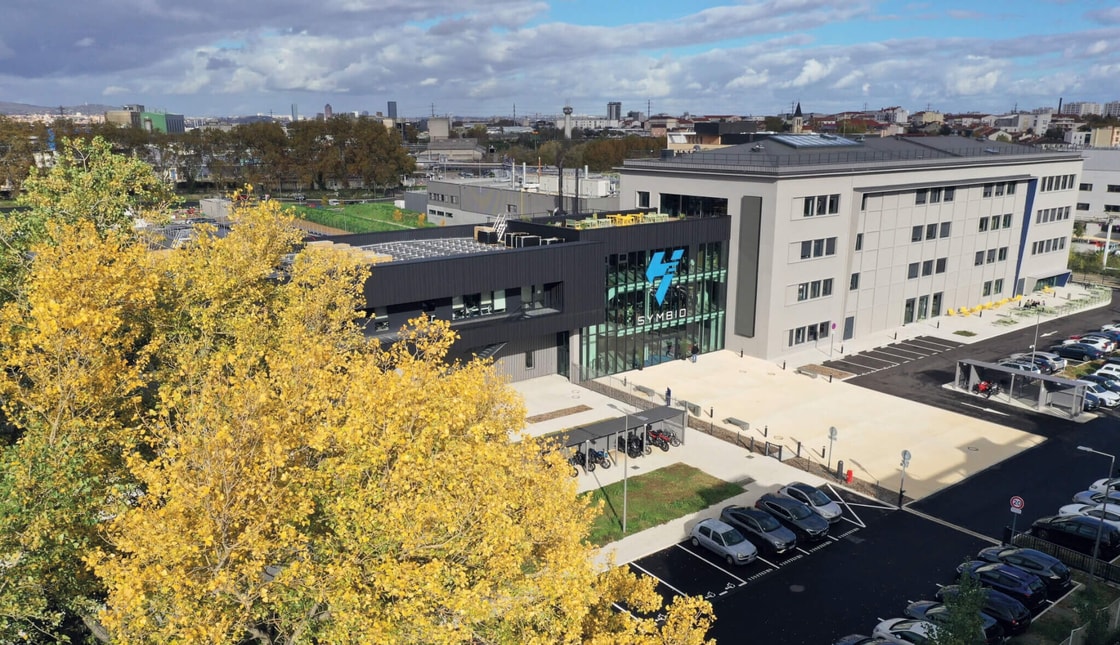
Symbio had completed final industrial validation in April and begun scaling production at SymphonHy, its Lyon facility.
“Stellantis’ radical decision results in the immediate and permanent termination of their hydrogen programs relating to LCVs, with significant potential impact on employment,” the company warned.
The firm’s leadership is now urgently exploring “several financial and industrial scenarios” to protect jobs and maintain operations.
Discussions with Stellantis are ongoing, with Symbio pushing the automaker to “honour its commitments, uphold its contractual responsibilities, and contribute to securing the company’s future – including through compensation.”
At the time of announcing its hydrogen exit, Stellantis said it was engaging with Symbio’s shareholder to assess how the move would impact the fuel cell firm.
Symbio says its ambition of giving Europe a hydrogen fuel cell technology “capable of competing with China” remains unchanged. “Now is the time for all of us to define a long-term direction and reconnect with our leadership,” Lucas added. “This is a matter of European industrial sovereignty.”