

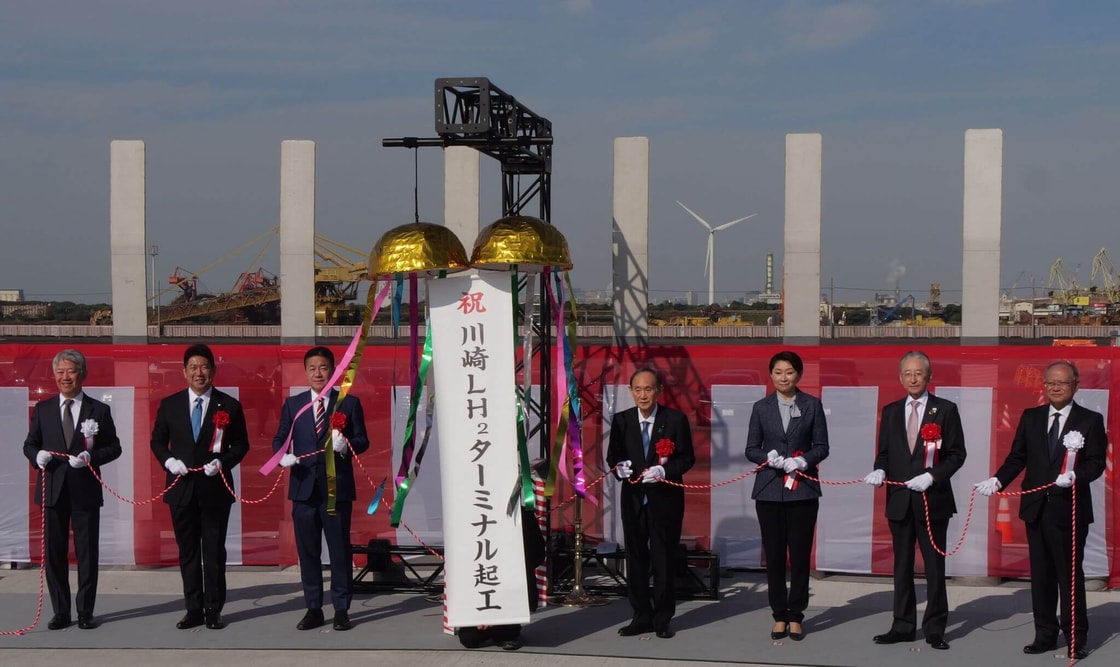
The Kawasaki LH2 Terminal in Ogishima will be equipped with a 50,000m3 liquid hydrogen storage tank, which the pair claim will be the “world’s largest”, along with maritime cargo handling, liquefaction, and lorry dispatch facilities.

© KHI
It is planned as an import and bunkering site for liquid hydrogen from 2030 onwards to import hydrogen into Japan for onward distribution to domestic consumers.
JSE, which is owned by KHI, Iwatani Corporation, and other Japanese investors, will manage the project, while a KHI joint venture will be the main design and construction contractor.
In addition to the terminal, the duo plan to construct a new 40,000m³ liquid hydrogen carrier – a scale-up more than 30 times larger than the 1,250m³ Suiso Frontier, which piloted the first export of hydrogen from Australia to Japan in 2022.
It comes as Japan accelerates efforts to secure large-scale, low-cost imported hydrogen from overseas producers.
In September, Woodside Energy signed an agreement to explore exporting volumes of blue hydrogen from its planned project in Perth, Australia, to Japan with JSE and the Kansai Electric Power Co.
The strategy is to transport hydrogen like liquefied natural gas, opening routes to decarbonise energy-importing countries like Japan.
However, critics say transporting liquid hydrogen over long distances is technically and economically challenging, due to the extremely low temperatures (–253ºC) the molecule must be kept at, and potential boil-off.
Supporters argue liquid hydrogen offers efficiency advantages over carriers like ammonia, which require an energy-intensive cracking process to release pure hydrogen.
Never miss a hydrogen headline
Hydrogen moves fast – stay on top of it with our daily and weekly briefings.
- Daily: The top five hydrogen stories, straight to your inbox
- Weekly: The week’s biggest news, features, interviews and analysis
- North American Bulletin: Dedicated coverage of the region’s key hydrogen developments