

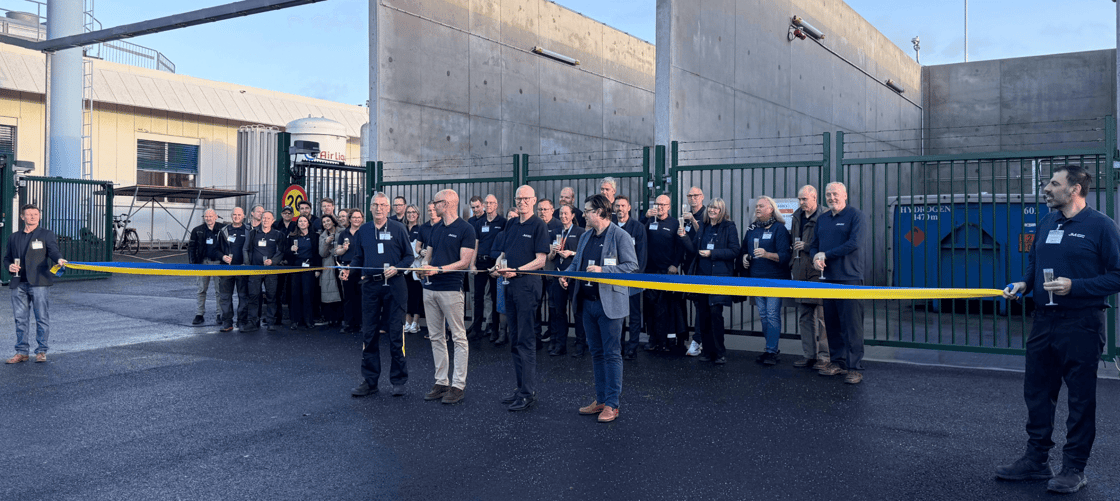
Marking the company’s first dedicated hydrogen ICE centre, it expands JM’s ability to test full hydrogen engines up to 600kW for trucks and buses.
The engines run on hydrogen instead of diesel, but use familiar technology, making them a potential low-carbon alternative. The new JM facility allows them to evaluate how catalysts and after-treatment systems perform in real conditions.
The Gothenburg factory also features on-site hydrogen supply and storage, high-pressure delivery systems, exhaust measurement equipment, and all required safety systems.
JM said the site was completed on time and on budget, and represents a £2.5m ($3.3m) investment over three years. The investment builds on Project Brunel, JM’s earlier collaboration with Cummins, Phinia, and Zircotec.
“[The facility] shows JM is backing hydrogen ICE as a ready-to-go technology that will enable mobility partners to meet their decarbonisation and climate goals,” explained Tauseef Salma, JM Chief Technology Officer in Clean Air.
“The opening of this new testing facility shows our commitment to strategic partnerships to drive innovation, strengthening the potential of hydrogen ICE as a Net Zero pathway for commercial vehicles.”
The opening reflects JM’s broader push to position hydrogen ICE as a near-term decarbonisation solution for heavy-duty transport.
The company’s Vice-President and Sustainable Technologies Director, Eugene McKenna, told H2 View that the technology can help scale early hydrogen demand and infrastructure before fuel cells reach wider commercial maturity.
Stay ahead with a H2 View subscription
Gain access to the insights, data, and analysis trusted by hydrogen professionals worldwide.
With a H2 View subscription, you get:
- Unlimited access to 15,000+ articles
- Monthly digital magazine + H2 Review
- Exclusive interviews, webinars and reports
- Expert analysis shaping the hydrogen conversation