

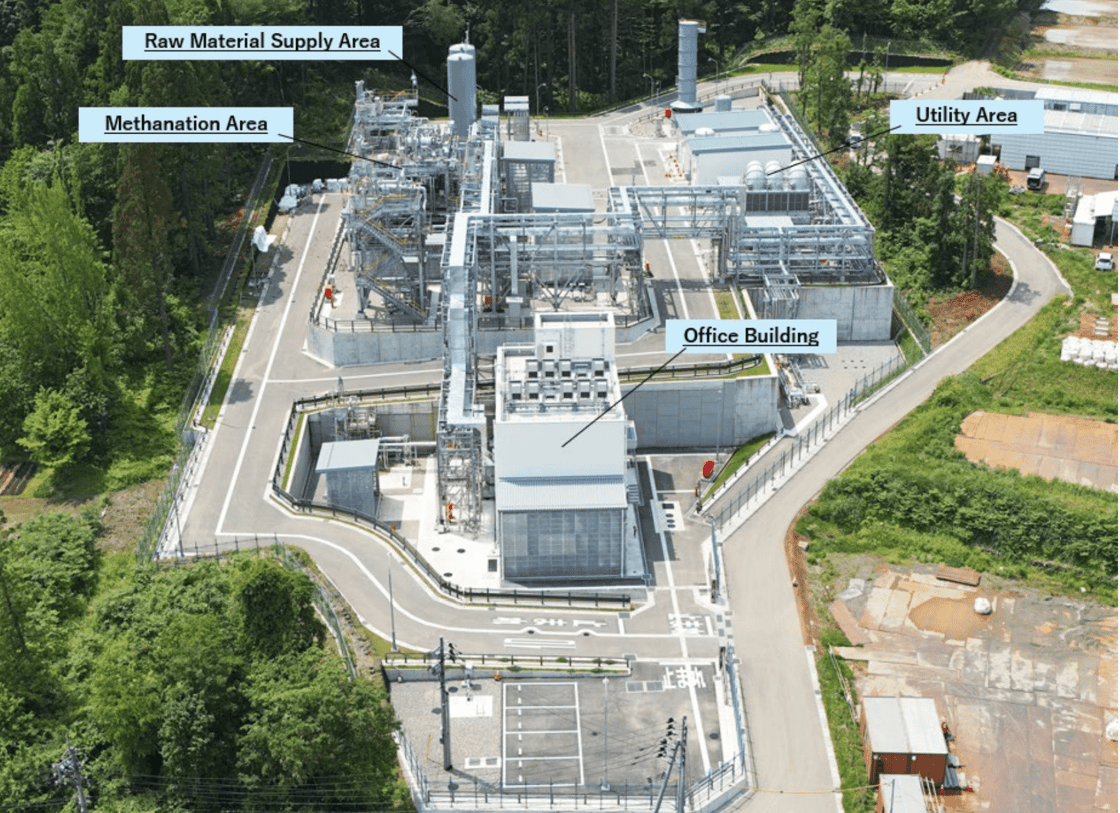
E-methane was produced by a test facility, connected to Inpex’s Koshijihara Plant, by combining hydrogen and carbon dioxide, and distributed through Osaka’s natural gas pipeline network.
The gas, which is chemically identical to methane, is made by reacting CO2 and green hydrogen at a high temperature in the presence of a catalyst, in a methanation system developed by Osaka Gas.
The CO2 was captured from the Koshijihara Plant’s industrial processes, while the source of hydrogen remains unidentified.
Inpex said the facility is the “world’s largest”, processing 400 normal cubic meters of CO2 per hour – enough to meet the gas consumption of around 10,000 households annually.
The company initiated the project in 2021, subsidised by the New Energy and Industrial Technology Development Organisation (NEDO).
It will study deploying the system in regions beyond Osaka, concurrent with the initial tests.
E-methane, sometimes called e-NG, is touted as a carbon-neutral drop-in gas. Osaka, alongside other Japanese gas firms, Tokyo Gas and Toho Gas, formed an e-NG coalition to raise awareness and promote the synthetic gas.
However, it is often criticised for its potential high costs due to the use of green hydrogen and captured CO2.
Never miss a hydrogen headline
Hydrogen moves fast – stay on top of it with our daily and weekly briefings.
- Daily: The top five hydrogen stories, straight to your inbox
- Weekly: The week’s biggest news, features, interviews and analysis
- North American Bulletin: Dedicated coverage of the region’s key hydrogen developments