

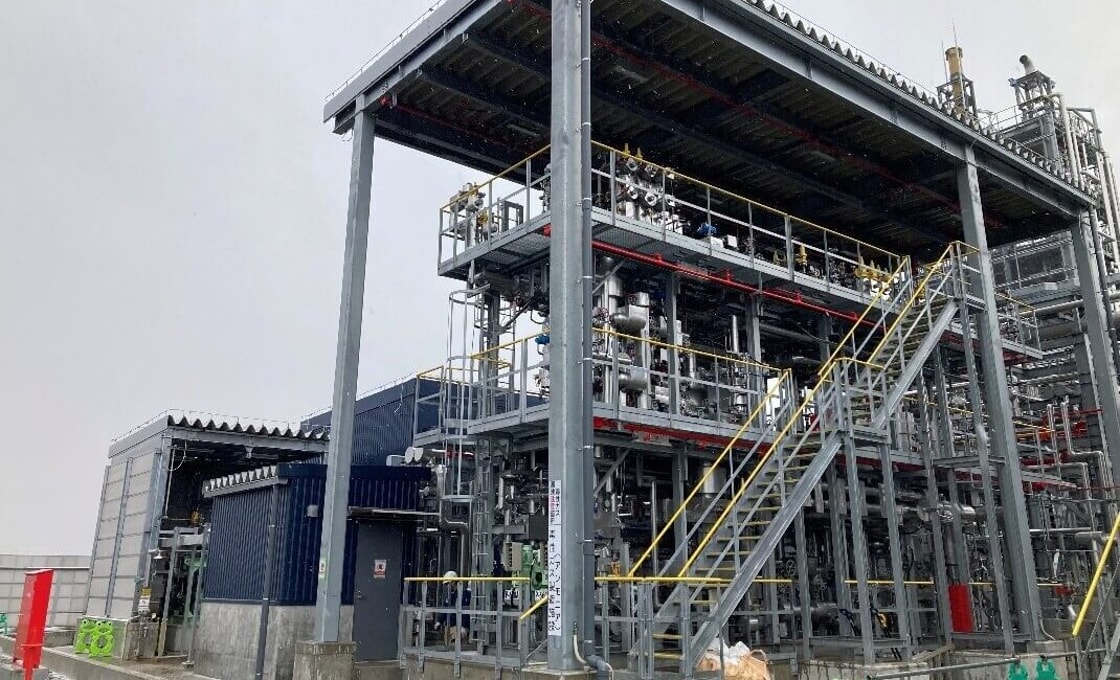
Tsubame BHB said its small-scale synthesis unit, using a proprietary electride catalyst, produced ammonia at Inpex Corporation’s blue hydrogen demonstration plant in Kashiwazaki.
The complex came online last November, producing blue hydrogen using Japanese natural gas, with captured carbon dioxide stored in the depleted Hirai gas field.
Some of the hydrogen produced by the facility has been supplied to Tsubame’s 500-tonne per year ammonia unit, which uses electrides – where electrons act as negative ions – from “inexpensive cement materials.”
The electride catalyst breaks the bonds of nitrogen molecules to allow hydrogen to be synthesised with it into ammonia.
The company claims the process operates at a smaller scale and lower temperatures and pressures, reducing energy consumption compared with the Haber-Bosch process.
Tsubame aims to deploy its technology in “on-site” systems that could be installed near end-users. It says it has received orders for two units in Japan.
The company intends to use data gathered by the project to inform the design of a 5,000-tonne production unit.
“By introducing Tsubame BHB’s facilities, I hope that we can gather data that will contribute to further increasing the competitiveness of ammonia production, and advance the introduction of large-scale blue ammonia production facilities for future energy applications,” said Tsubame CEO Koji Nakamura.
Japan has been looking to use ammonia to reduce CO2 emissions from its coal-fired power plant fleet.
As the UK ends coal, Asia embraces ammonia co-firing
In September, the UK became the first major nation to end its use of coal in electricity generation, concluding its more than 140-year reliance on the fossil fuel. The closure of the Ratcliffe-on-Soar plant on September 30 reflects the UK’s aim for all electricity to be generated from clean sources by 2035.
In contrast to the UK’s outright elimination of coal, countries in Asia face a different challenge. With a more substantial reliance on coal and less immediate access to natural gas and renewable infrastructure, nations like Japan and South Korea are looking at transitional solutions like ammonia co-firing to reduce emissions while maintaining energy security…
Click here to keep reading.