

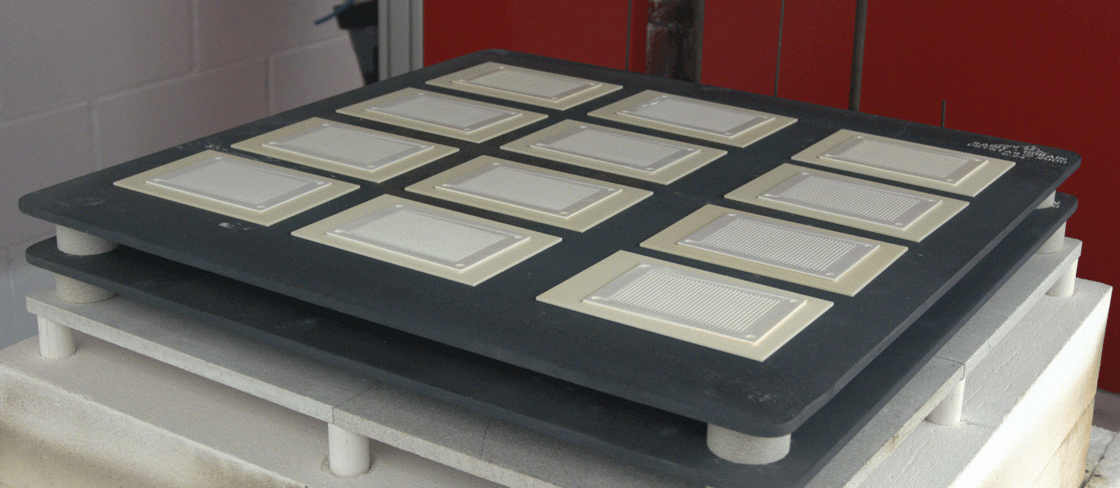
The Spanish public research institute has launched a world-first demonstration at its Merce Lab pilot line in Catalonia – a pre-industrial manufacturing facility with a capacity of around 2MW/year designed to validate large-scale SOC production.
IREC argues 3D printing allows SOC systems to be cheaper, lighter, and more suitable for aviation, maritime, and large-scale applications.
IREC said its 3D-printed SOC modules cost around €800/kW and could help reduce hydrogen to below €4/kg ($4.35/kg), while delivering four times the power density of existing commercial technologies.
Furthermore, it uses fewer critical raw materials, such as nickel, cobalt, and rare earths, and the modules can be scaled up.
The €2m ($2.2m) pilot plant was co-funded through Spain’s €25m ($27m) IPCEI Tecnopropia project led by H2B2, together with EU NextGeneration support and several Horizon Europe projects.
“This is a disruptive approach to manufacturing processes and performance of ceramic-based devices,” Marc Torrel, Head of Merce Lab at IREC, said.
He added that it will “open the door to new SOC systems for applications that previously could not meet desired requirements, such as maritime or aviation transport.”
The pilot line aims to support Europe’s domestic electrolyser manufacturing capacity and reduce reliance on imports.
SOECs are among the most efficient electrolysers, using up to 25% less energy than PEM or alkaline units.
However, despite its potential, SOEC remains a nascent technology, with no large-scale systems operating globally.
Never miss a hydrogen headline
Hydrogen moves fast – stay on top of it with our daily and weekly briefings.
- Daily: The top five hydrogen stories, straight to your inbox
- Weekly: The week’s biggest news, features, interviews and analysis
- North American Bulletin: Dedicated coverage of the region’s key hydrogen developments