

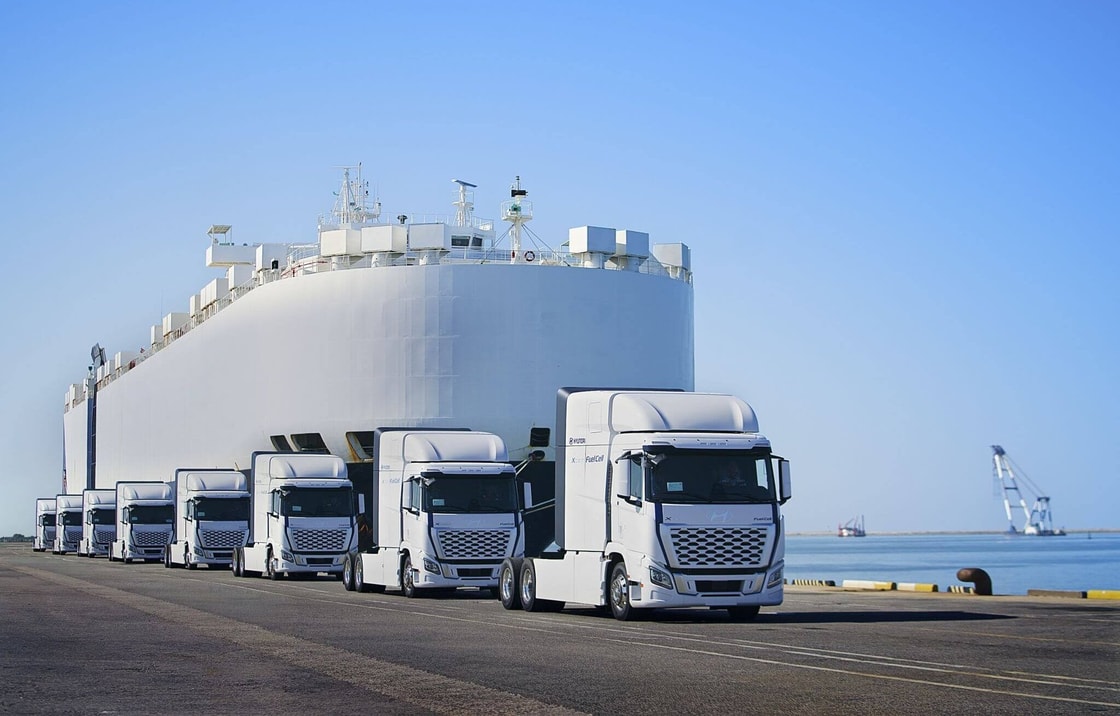
The Xcient fuel cell truck fleet was sent from the Port of Gunsan in South Korea yesterday. Once in Montevideo, they will operate in the Kahirós project, which will provide green hydrogen fuel for local trucks.
Hyundai fuel cell truck distributor Fidocar is part of the consortium establishing the initiative, which includes the development of a 2MW green hydrogen plant in 2026.
Being used to transport timber, each of Hyundai’s vehicles can travel more than 720km on 31kg of hydrogen storage. The automotive major said this was enough “to complete a full timber transport cycle on a single charge.”
Hyundai’s Xcient trucks have already been deployed in various markets, including Switzerland, Germany and the US, primarily for commercial freight operations.
Two vehicles were deployed by Edeka Nord last March to perform logistics operations in Germany. The trucks were used to deliver goods to stores in northern Germany.
Despite growing global interest in hydrogen mobility, 2025 has brought major setbacks for manufacturers focused solely on hydrogen-powered vehicles.
Fleet operators remain uncertain about how these trucks fit into their logistics models, and infrastructure investors are seeking stronger evidence of commercial viability.
McKinsey estimates that achieving cost parity per kilometre with diesel by 2030 would require substantial reductions in both hydrogen fuel prices and vehicle costs.
Hyundai’s Uruguay project shows how targeted logistics operations built around emerging green-hydrogen hubs could offer early footholds for commercial viability.
Stay ahead with a H2 View subscription
Gain access to the insights, data, and analysis trusted by hydrogen professionals worldwide.
With a H2 View subscription, you get:
- Unlimited access to 15,000+ articles
- Monthly digital magazine + H2 Review
- Exclusive interviews, webinars and reports
- Expert analysis shaping the hydrogen conversation