

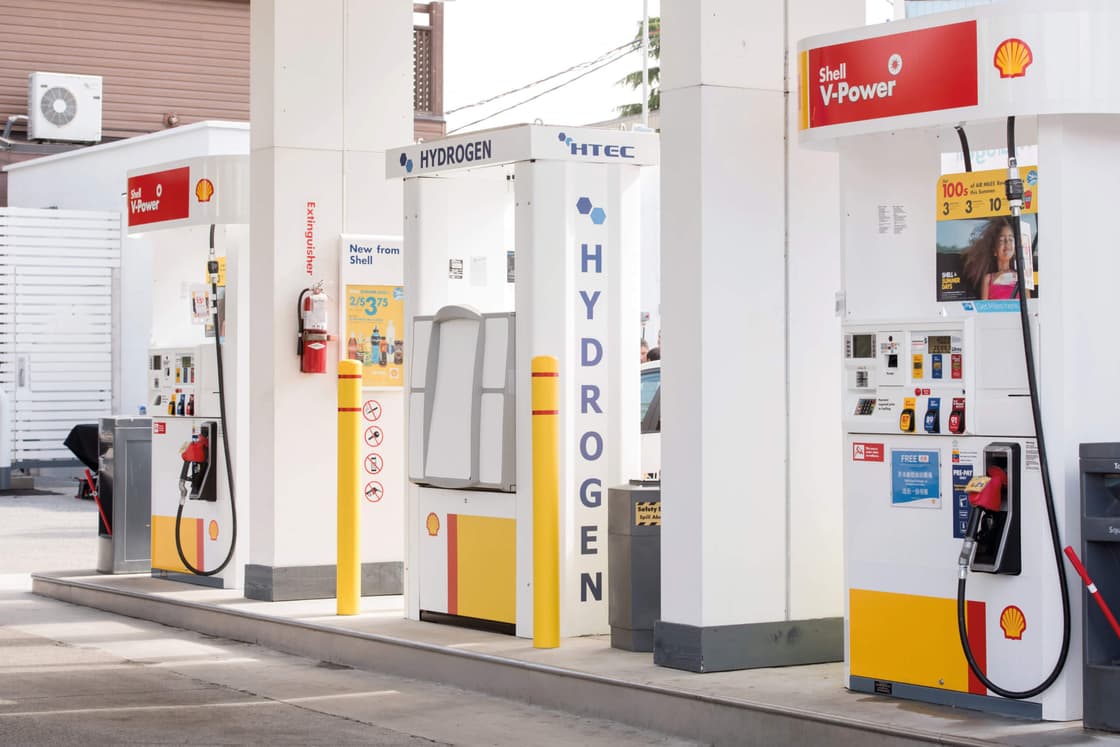
In California in the US, Shell will no longer operate any of its seven light-duty hydrogen fuelling stations. This will cut the number of active light-duty open retail stations in California to 61, according to the latest data from the California Energy Commission (CEC), which tracks fuel cell electric vehicle sales and stations.
The Shell stations are closing “due to hydrogen supply complications and other external market factors,” said the CEC update. But the company is keeping all its heavy-duty refuelling stations.
“Supply is available, but hydrogen demand has simply grown much more slowly than projected, making it challenging for refuelling stations to recoup costs, especially with LCFS credit prices below $100/mt since mid-2022,” said Brian Murphy, Senior Hydrogen and Low-Carbon Fuels Analyst at S&P Global Commodity Insights.
Germany-headquartered H2 Mobility is similarly set to close 11 small 700-bar refuelling stations in Germany shortly, with a further 11 stations to follow by the end of the second quarter, completing a network rationalisation that began in 2022.
The hydrogen refuelling stations in Neuruppin, Bonn, Flensburg, Geisingen, Potsdam, Ulm, Siegen, Aachen, Bad Rappenau, Heidelberg (Speyerer Straße) and Mönchengladbach will be closed on 31March 2025. The company is now investing in the new generation of hydrogen refuelling stations with a focus on buses and commercial vehicles.
Martin Jüngel, Managing Director and CFO of H2 Mobility, said the hydrogen mobility market in Germany had changed significantly during the past decade.
“For some years now, our strategic focus has been on a regional, demand-based expansion of the hydrogen infrastructure for light and heavy commercial vehicles. Older, small refuelling stations with a focus on passenger cars, some of which were built more than 10 years ago and no longer meet today’s technical and economic requirements, must be removed from the network where this is unavoidable.”
And in Poland, Polish transport operator MPK Poznan has abruptly recalled all Solaris Urbino 12 hydrogen buses from service just weeks after finalising a contract for nine additional units with the manufacturer Orlen. According to local reports, the decision was made as an emergency measure after onboard diagnostic systems in all vehicles detected unexpected malfunctions.
The recall impacted all 25 hydrogen buses operated by MPK Poznan, which were purchased in 2023. This marks the first major incident involving these vehicles.
Read more: Poznan recalls all Solaris hydrogen buses over malfunctions, weeks after expanding fleet order
Finally, US fuel cell and truck firm Hyzon recently issued a special voting share to its acting CEO, Dr Christian Mohrdieck, to ensure its proposed liquidation and dissolution plans proceed.
The troubled operator issued Series A preferred stock to Mohrdieck, granting him a number of votes equal to all outstanding Class A common stock. This move effectively guaranteed approval of the liquidation plan.
Read more: Hyzon grants acting CEO special voting power to secure liquidation plan