

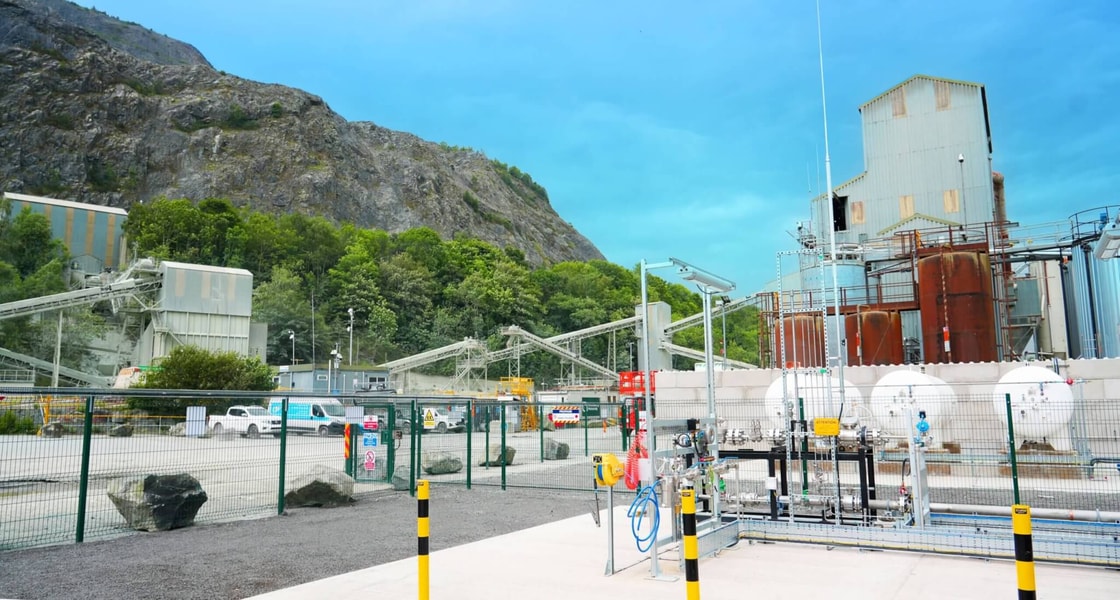
The Criggion trial came under the UK government’s Industrial Hydrogen Accelerator programme and received part-funding from the Department for Energy Security and Net Zero (DESNZ).
Hydrogen was used to replace liquid fossil fuels to produce more than 1,300 tonnes of asphalt, without any impact on the quality or performance of the material.
The project demonstrated hydrogen as a viable alternative to fossil fuels in asphalt production, achieving a 76% reduction in Scope 1 (direct) emissions, equating to a 23% reduction in the overall carbon footprint of the asphalt produced.
The source and volume of hydrogen used in the trial were not disclosed.
Simon Willis, Heidelberg Materials UK CEO, said if we are to reach our net zero ambitions, we need to consider carbon reduction measures across all areas of our operations.
“Fuel switching to hydrogen is one of these along with, for example, the development of carbon capture and storage, the use of alternative and secondary materials, and developing circular solutions,” he said.
“Hydrogen will be a vital solution to decarbonise heavy industry where electrification is difficult, and this successful demonstration of its potential to produce low-carbon asphalt for the construction industry is a major step forward.”
In total, 4,522kg of hydrogen was used during the trial at Criggion, saving 25,105kg of CO₂. If scaled across the UK asphalt industry, savings could reach 450,000 tonnes of CO₂ a year.
Heidelberg Materials is a member of Made with Hydrogen, a consortium of organisations responsible for manufacturing daily essentials.
Using hydrogen in widespread asphalt production faces significant challenges such as high costs, limited infrastructure, technical hurdles with high-temperature combustion, and safety risks. Green hydrogen is not widely available, and supply chains are still in their infancy.
Heidelberg Materials’ Padeswood (north Wales) cement facility aims to capture around 800,000 tonnes of CO₂ a year from its existing cement works, thereby producing net-zero cement.