

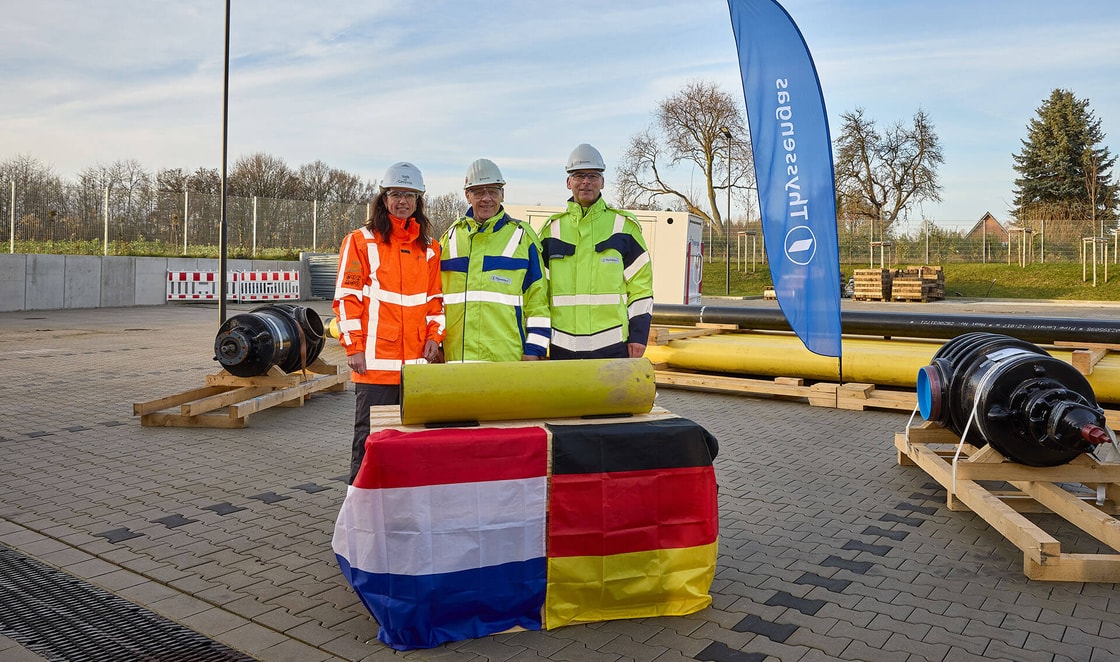
Under a joint development agreement, the pair intend to convert existing natural gas pipelines to carry hydrogen between the Netherlands and Germany at Oude Statenzijl in Groningen and Vlieghuis in Drenthe.
The pipelines could connect Dutch industrial areas, import terminals, storage, and production facilities with German industrial clusters in the Ruhr region and chemical facilities in Rhineland.
However, the pace and scale of utilisation will depend on whether sufficient long-term offtake commitments emerge from energy-intensive industries, many of which are still assessing hydrogen costs and supply security.
Thyssengas has already begun converting its natural gas pipeline between Vlieghuis and Ochtrup, which will feed into Germany’s 9,000km hydrogen core network.
The agreement defines technical standards and organisational responsibilities, laying the groundwork for future hydrogen interconnections across northwest Europe.
“The agreement reached enables transport not only via our infrastructure between the Netherlands and Germany, but also to and from Denmark,” said Gasunie Director of Hydrogen Transport, Helmie Botter.
The agreement comes as Germany’s hydrogen network enters initial commissioning and test injections, following Gascade’s conversion of around 400km of natural gas pipelines.
German transmission system operators (TSOs) are due to begin capacity reservations from 2026, allowing producers, industrial users, and traders to make binding bookings for future entry and exit points.
Stay ahead with a H2 View subscription
Gain access to the insights, data, and analysis trusted by hydrogen professionals worldwide.
With a H2 View subscription, you get:
- Unlimited access to 15,000+ articles
- Monthly digital magazine + H2 Review
- Exclusive interviews, webinars and reports
- Expert analysis shaping the hydrogen conversation