

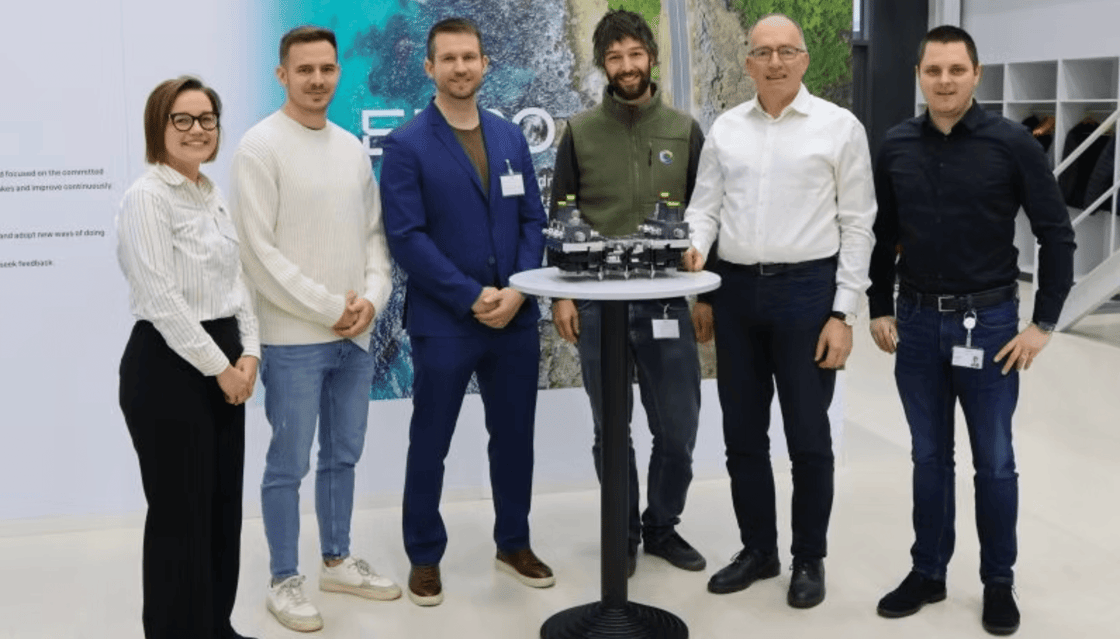
German firms Ionysis and EKPO Fuel Cell Technologies, alongside Slovenia’s ReCatalyst, said the short-stack had been assembled “exclusively” with PFAS-free components, including the membrane, electrode ionomers, and gas diffusion layer.
It was developed under a project called Enabler, which received €2.5m ($2.9m) in EIC funding.
ReCatalayst supplied the catalysts, while Ionoysis provided catalyst-coated membranes (CCMs). EKPO was responsible for assembling and operating the stack.
During single-cell testing, the trio said the CCMs achieved current densities of up to 2A/cm2 at 0.65V, which the firms say is “on-par” with “state-of-the-art PFSA-based reference cells.”
Stefan Dwenger, Managing Director of EKPO, said that Enabler had produced a strong proof point with the system.
“The results show that PFAS‑free material systems are no longer just a laboratory concept, but a considerable option for future fuel cell generations,” he continued.
PFAS are widely used in hydrogen technologies like fuel cells and electrolysers due. They are a family of thousands of man-made chemicals created by replacing hydrogen atoms with fluorine atoms to give them water and oil-repellent properties.
The fluorinated parts of emitted PFAS are not degradable – meaning that once released into the environment, these PFAS cannot be broken down into carbon dioxide or methane by bacteria, enzymes, or sunlight, giving them the tag “forever chemicals”.
There are currently few commercial alternatives to the substances in hydrogen applications.
While the hydrogen sector has stressed that the types of PFAS used across the industry are “polymers of low concern,” regulatory pressure is building, with EU restrictions on some substances due to begin this October.
Never miss a hydrogen headline
Hydrogen moves fast – stay on top of it with our daily and weekly briefings.
- Daily: The top five hydrogen stories, straight to your inbox
- Weekly: The week’s biggest news, features, interviews and analysis
- North American Bulletin: Dedicated coverage of the region’s key hydrogen developments