

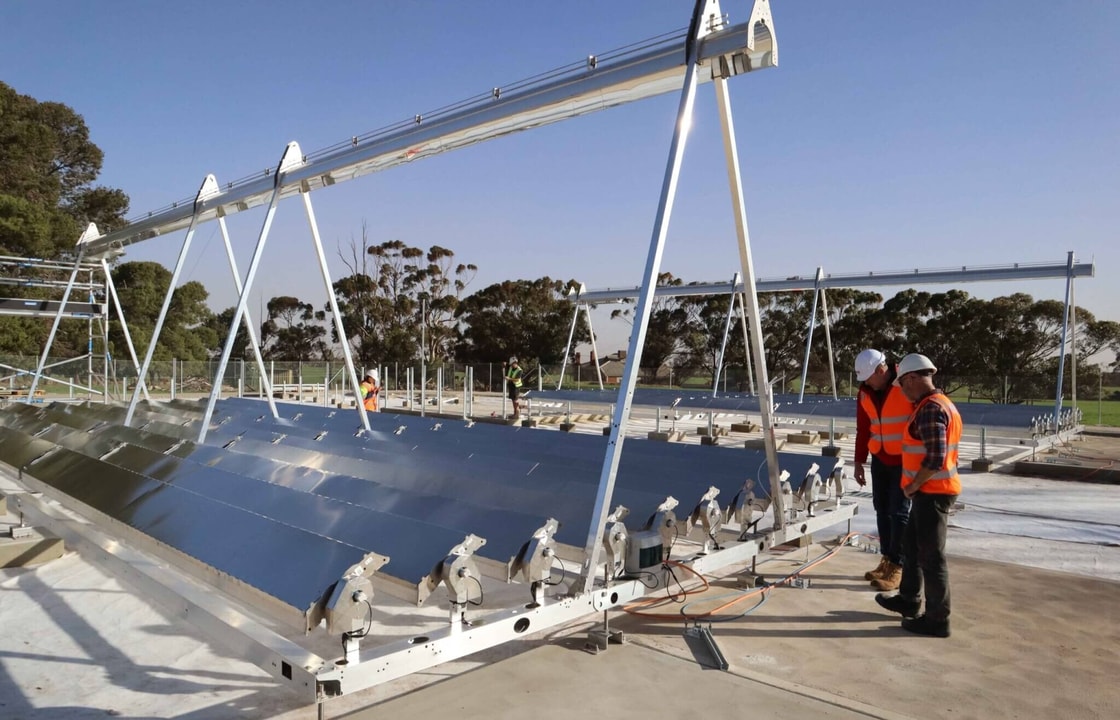
The plant at the University of Adelaide’s Roseworthy campus recently achieved “sustained” hydrogen generation for the first time, with technical teams now set to test the technology across a range of solar concentrations, temperatures, and pressures.
“Sustained hydrogen generation at Roseworthy is a significant milestone for Sparc Hydrogen and the broader green hydrogen and photocatalytic water splitting industries,” said Sparc Technologies Managing Director Nick O’Loughlin.
The Managing Director said the plant’s commissioning was the culmination of over a year of work.
PWS is a solar-powered water splitting process, which directs solar energy through a photocatalyst material to split water into hydrogen and oxygen.
Sparc Hydrogen – a joint venture between Sparc Technologies, Fortescue, and the University of Adelaide – claims the technology has advantages over traditional electrolysis.
It says the pathway addresses electrolytic hydrogen’s “fundamental issue” of high renewable electricity costs, while also offering a more flexible, distributed route to clean hydrogen generation.
The team has not yet revealed hydrogen production rates from the pilot.
Critics argue that the technology faces material limitations related to unstable or rare catalyst materials. They also point to hydrogen and oxygen separation concerns.
Currently, the Roseworthy pilot is using photocatalyst materials provided by Japan’s Shinshu University, with Sparc also in talks with other material developers to conduct further tests at the site.
Stay ahead with a H2 View subscription
Gain access to the insights, data, and analysis trusted by hydrogen professionals worldwide.
With a H2 View subscription, you get:
- Unlimited access to 15,000+ articles
- Monthly digital magazine + H2 Review
- Exclusive interviews, webinars and reports
- Expert analysis shaping the hydrogen conversation