

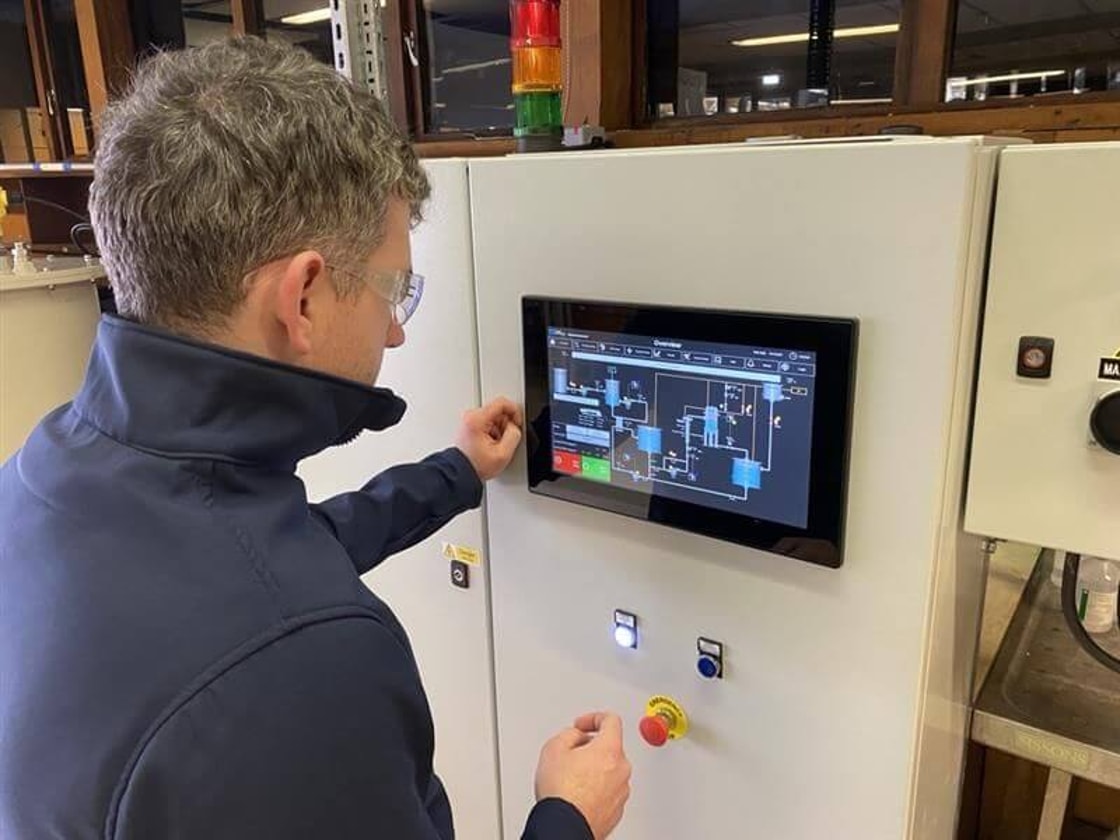
The University of Glasgow spin-out said its decoupled electrolyser could be integrated with intermittent renewables and store hydrogen in a non-gaseous form, offering a potential solution to long-term energy storage.
Clyde’s beta technology splits water into two stages with an electrochemical reduction and a catalytic generator to improve flexibility when using renewable power.
This development comes after the decoupled electrolysis system produced its first molecules in March 2025.
Now, the start-up expects to have its first market-ready product available in 2028. Last year, Clyde inked a memorandum of understanding with Scotland’s PlusZero to bring forward out-of-lab demonstrations of the technology.
Prof. Mark Symes, co-inventor of the technology, said the company would build an “end-to-end system” for field trials and sales.
James Peck, CEO of Clyde Hydrogen, spoke of the development’s potential to attract investors, emphasising a focus on finding the right partners to facilitate “real-world” application of the product.
The firm intends to launch a seed round to secure up to £5m by the end of Q2.
Clyde has previously received funding from the Scottish Government’s Hydrogen Innovation Scheme, the Net Zero Technology Centre, Zinc, Ecotricity, and the University of Glasgow.
Stay ahead with a H2 View subscription
Gain access to the insights, data, and analysis trusted by hydrogen professionals worldwide.
With a H2 View subscription, you get:
- Unlimited access to 15,000+ articles
- Monthly digital magazine + H2 Review
- Exclusive interviews, webinars and reports
- Expert analysis shaping the hydrogen conversation