

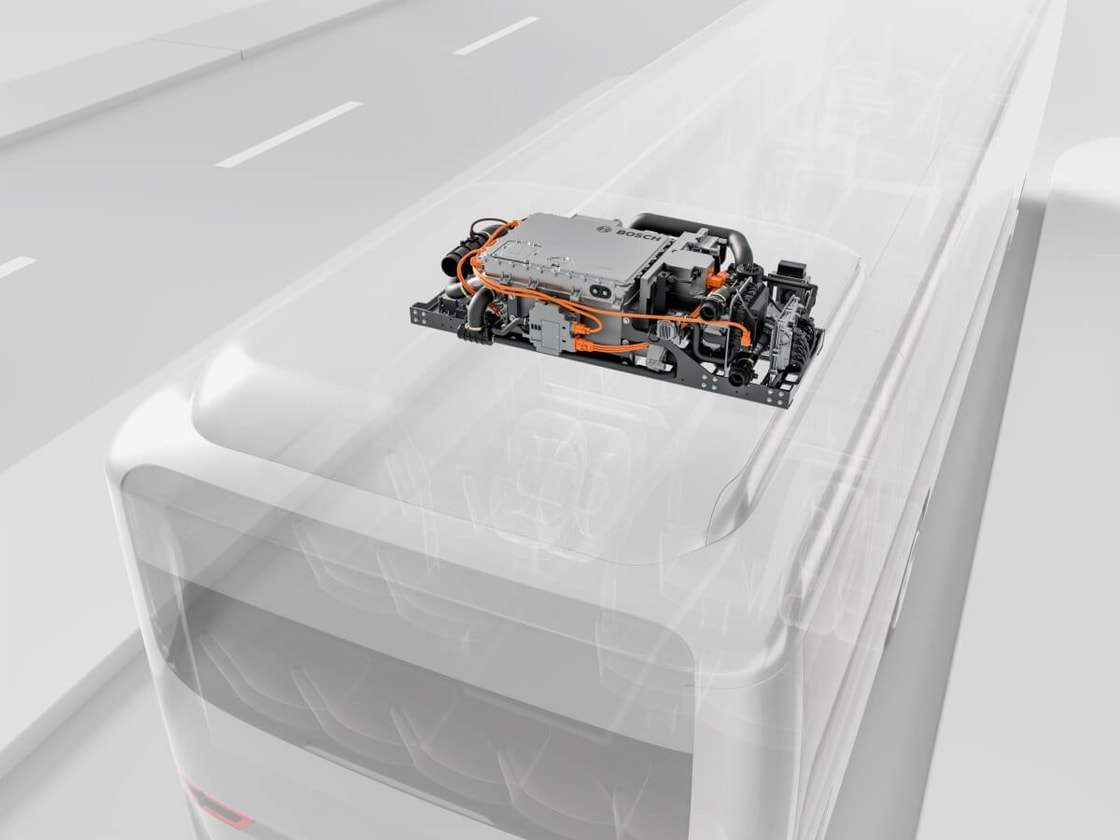
The engineering major will reveal the system, available in three different power variants, at an event in Berlin.
According to Bosch, the systems will be suitable for buses between 12 and 18 metres long with the 100kW and 190kW iterations suited to intercity buses and coaches and the 300kW module appropriate for heavy-duty transport.
The 190kW variant is set for testing in the first half of 2026.
Jan-Oliver Röhrl, Chairman of Bosch’s global commercial vehicle activities, said the new propulsion system could work in conjunction with battery electric buses to help decarbonise transport.
This comes as EU green hydrogen usage mandates in the mobility sector require the energy carrier to meet 1.2% of transport energy by 2030 under the Renewable Energy Directive III.
Hydrogen buses are gaining traction with transport operators decarbonising their fleets to meet these requirements.
Despite increased range and low refuelling times, hydrogen vehicles are often criticised for their low energy efficiency compared to battery electric vehicles.
In a recent H2 View webinar, David Cebon, Professor of Mechanical Engineering at Cambridge University, said that converting electricity to hydrogen and back again only delivers a third of the useful motion you’d get from using electricity directly.
The voice of gases and energy
Tune into the conversations shaping gases and energy. The 1895 Podcast from gasworld Global Insights (GWGI) brings you weekly analysis, insights, and interviews in a laid-back, conversational style.
Each episode explores:
• The biggest industry news and talking points
• Regional, technological, and application trends
• The role of gases in today’s energy transition
Listen and subscribe on Apple, Spotify, Amazon Music – or wherever you get your podcasts.