

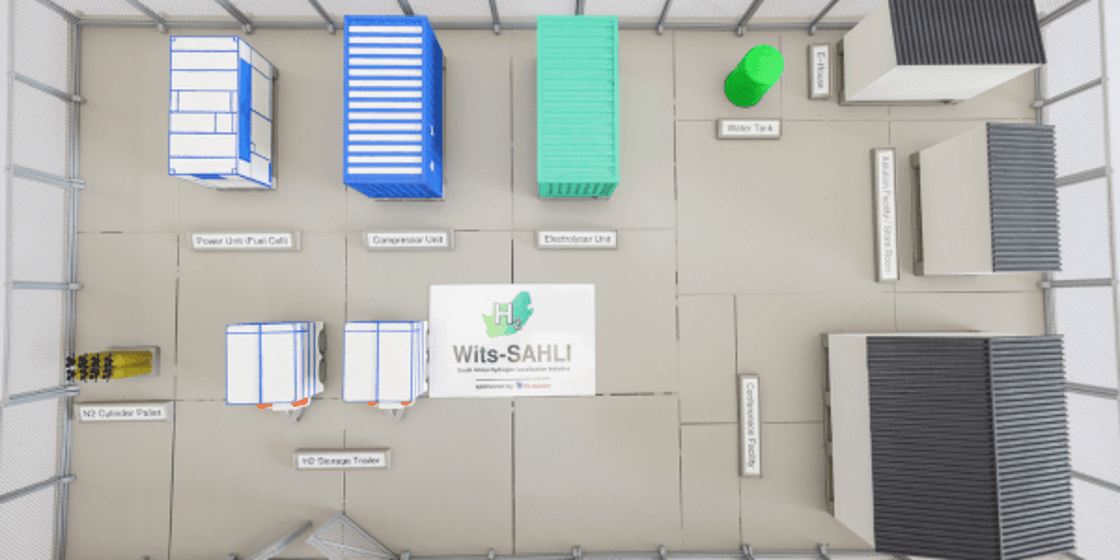
The French industrial gas major’s local subsidiary, Wits University (Wits), and the Localisation Support Fund (LSF) will work on the system, which comes under the new Wits-South Africa Hydrogen Localisation Initiative (Wits-SAHLI).
Expected online by 2028, the 2.2kg per hour facility with 200kg of on-site storage will be used by the university for teaching, research, testing, campus energy needs, and campus transport projects.
At 2.2kg per hour, the electrolyser will have a around 110kW capacity.
It will use solar energy from the campus’s 14 solar installations, a mix of photovoltaic and hot water systems, which have a total peak capacity of approximately 1,700kW.
LSF is a 2021-established non-profit organisation aimed at catalysing the local industrialisation of South African firms through industry research.
Nkululeko Magadla, CEO of Air Liquide Southern Africa, said the system will be a boon for the country’s hydrogen economy, equipping a “home-grown workforce” with relevant skills and knowledge and “empowering a local ecosystem”.
South Africa remains a nascent market for green hydrogen production with its strong potential for solar and wind resources making it well-suited to low-cost hydrogen production.
June 2025 saw its first large-scale green ammonia project. Planned for the Coega Special Economic Zone, the project was backed with R318m ($20m) from the SA-H2 fund which aims to accelerate the country’s green hydrogen economy.
However, large-scale industrial green hydrogen projects remain scant.
Reach the global hydrogen audience
Put your brand at the heart of the hydrogen conversation. With H2 View, you can reach decision-makers and professionals across the global hydrogen value chain.
Our 2026 Media Guide shows how you can:
• Advertise across digital, print, and newsletters
• Connect with a highly engaged hydrogen audience
• Align your company with trusted industry coverage
Download H2 View’s Media Guide today