

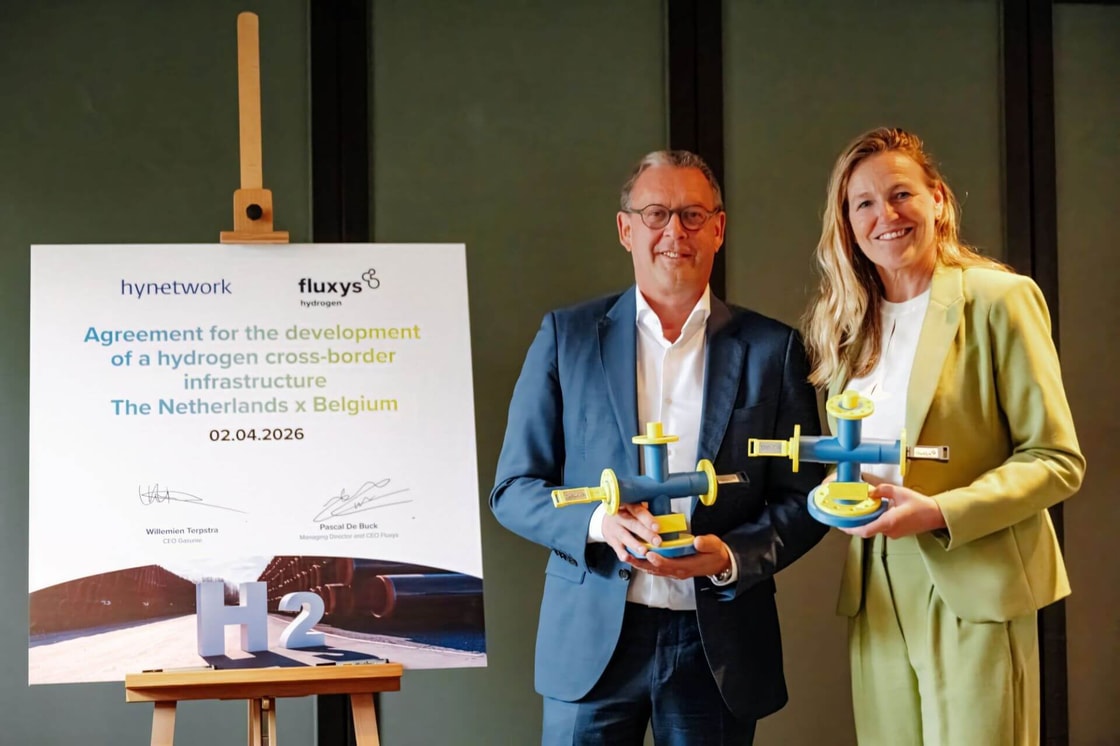
The transmission system operators (TSOs) aim to complete the connection by 2030 using repurposed natural gas pipelines at the border between the Belgian Antwerp province and the Dutch Zeeland province.
This interlinking location already hosts multidirectional gas transport to industrial clusters, including the North Sea Port and Port of Rotterdam in the Netherlands, and the ports of Antwerp and Ghent in Belgium.
Fluxys is Belgium’s hydrogen network operator with plans to initially connect import facilities at the major ports of Antwerp and Zeebrugge, before building a wider interconnected network integrating local producers by 2035.
Meanwhile, Gasunie plans to build a 1,200km network across the Netherlands, linking industrial users, producers, and import terminals.
Gasunie said the JDA could allow for further border points to be established moving forward.
Helmie Botter, Gasunie’s Hydrogen Transport Director, said the cross-border hydrogen infrastructure will strengthen an integrated hydrogen market in Europe.
Western Europe’s web of hydrogen pipelines has seen increasing construction activity as TSOs – often backed by the EU’s Connecting Europe Facility funding – equip the region to transport the molecule.
The Port of Rotterdam’s 200MW green hydrogen project, implemented by Shell, recently became the first Dutch facility to connect to the country’s network. Gasunie also recently launched surveys for a 70km hydrogen and carbon dioxide pipeline network.
Reach the global hydrogen audience
Put your brand at the heart of the hydrogen conversation. With H2 View, you can reach decision-makers and professionals across the global hydrogen value chain.
Our 2026 Media Guide shows how you can:
• Advertise across digital, print, and newsletters
• Connect with a highly engaged hydrogen audience
• Align your company with trusted industry coverage
Download H2 View’s Media Guide today