
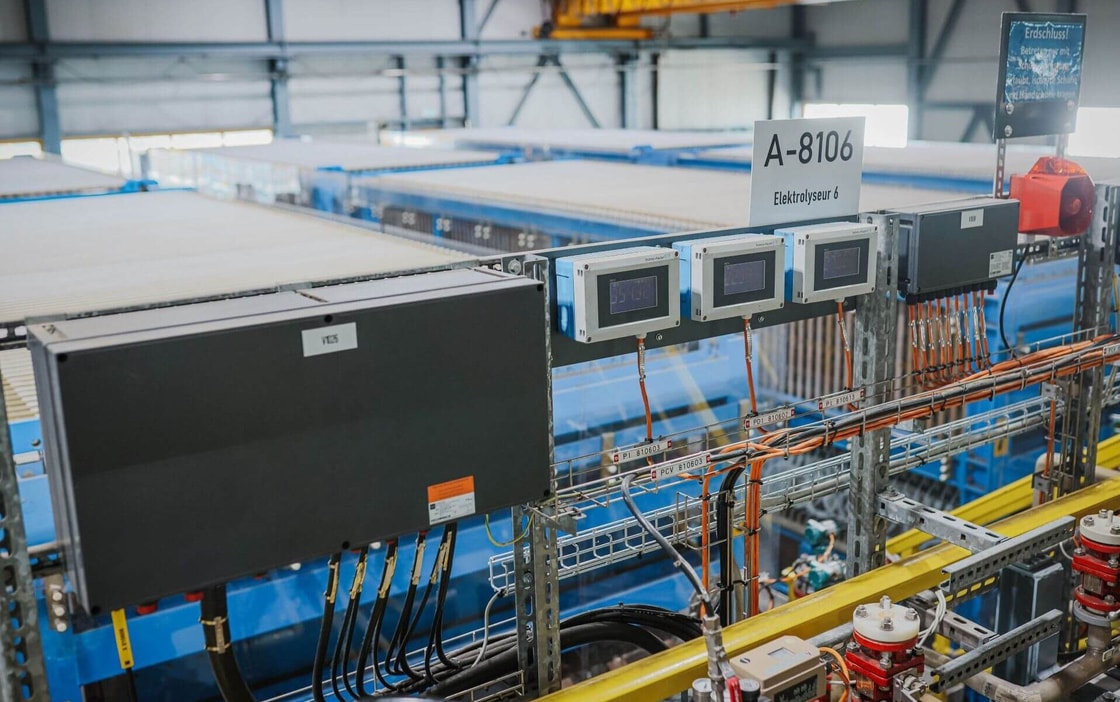
The company was awarded renewable fuels of non-biological origin (RFNBO) certification for up to 6,000 tonnes of green hydrogen per year at its Frankfurt site from environmental certifier ISCC System.
Nobian produces salt and essential chemicals, which stem from chlor-alkali electrolysis. Similar to water electrolysis, the process electrolyses brine to generate chlorine, hydrogen, and sodium hydroxide.
By-product hydrogen from chlor-alkali is often underutilised or used internally. However, by using traceable renewable electricity to power the entire process, Nobian’s hydrogen can now be captured and sold as RFNBOs.
Under the EU’s RFNBO rules, electrolyser operators must use electricity from new renewable sources, matching electricity use with renewable generation and location.
This follows certification of around 14,000 tonnes of green hydrogen production at the company’s Rotterdam chlor-alkali plant in 2025.
With the Frankfurt addition, Julien Courtois, Senior Product & Business Development Manager Hydrogen at Nobian, claimed the firm was Europe’s “largest producer of certified green hydrogen.”
Nobian has not identified offtakers for its RFNBO hydrogen, but said it would work with regional partners to bring volumes “to the market,” highlighting uncertainty around RFNBO demand.
“This supports our customers to lower their carbon footprint and helps develop a sustainable hydrogen economy,” Nobian’s Senior Vice-President Chlor-Alkali & Chloromethanes, Markus Mingenbach, said.
The certification highlights a growing route to market for hydrogen derived from existing industrial processes, which may offer lower-cost volumes than dedicated water electrolysers.
In the US, several players are moving to monetise chlor-alkali-derived hydrogen. Last December, K2 Pure Solutions started expanding its California site with hydrogen capture, purification, and compression to sell hydrogen.
However, supply from chlor-alkali processes will remain constrained by chlorine demand, potentially limiting its role compared to dedicated electrolysis projects.
Stay ahead with a H2 View subscription
Gain access to the insights, data, and analysis trusted by hydrogen professionals worldwide.
With a H2 View subscription, you get:
- Unlimited access to 15,000+ articles
- Monthly digital magazine + H2 Review
- Exclusive interviews, webinars and reports
- Expert analysis shaping the hydrogen conversation