

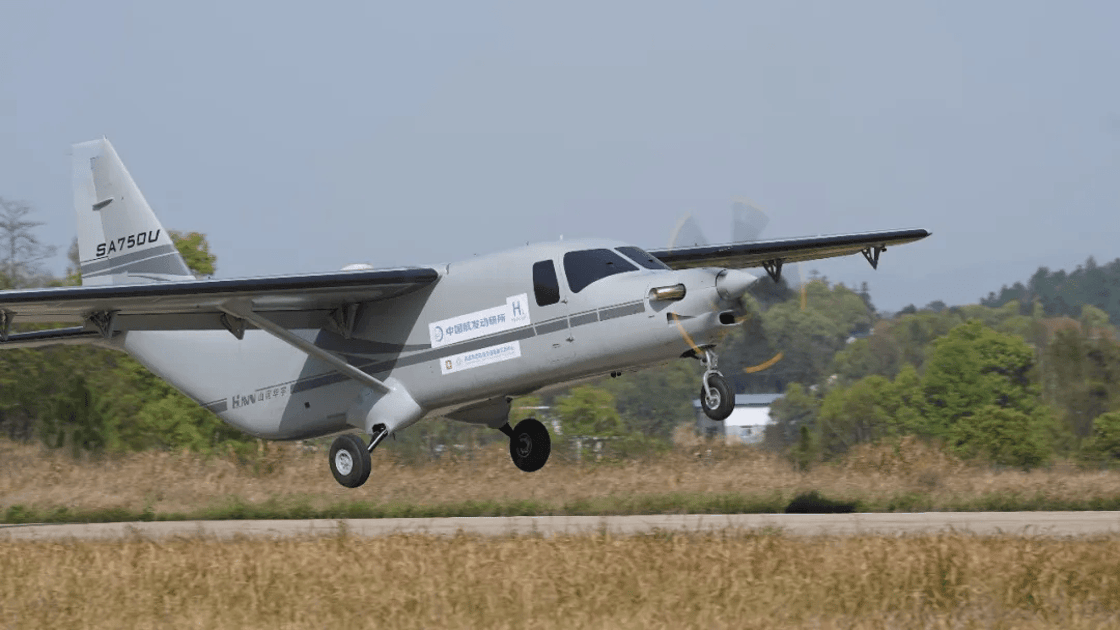
The Aero Engine Corporation of China (AECC) said the 16-minute unmanned test flight from Zhuzhou Lusong airport saw the 7.5-tonne aircraft reach speeds of 220km per hour and 300 metres of altitude.
It was powered by an AECC-developed megawatt-class liquid hydrogen fuel cell turboprop engine.
In a statement, AECC said the flight represents an important milestone in China’s green aviation power development.
Hydrogen’s role in aviation has come under increasing scrutiny due to its low efficiency compared to pure-electric alternatives and high infrastructure requirements.
The low volumetric density of hydrogen requires bulky cryogenic tanks, which are disruptive to aircraft design. The extremely low temperatures required also introduce operational complexity around boil-off losses, in addition to high fuel production and logistic costs.
ZeroAvia, which completed numerous gaseous hydrogen and fuel cell-powered flights, secured a £10.8m grant from the UK government to develop a liquid hydrogen fuel system. However, the firm recently slashed its workforce and limited the scope of developing its hydrogen powertrains.
Hydrogen in aviation has seen wider setbacks with Airbus delaying its commercial hydrogen aircraft plans and the 2024 collapse of aviation start-up Universal Hydrogen.
Reach the global hydrogen audience
Put your brand at the heart of the hydrogen conversation. With H2 View, you can reach decision-makers and professionals across the global hydrogen value chain.
Our 2026 Media Guide shows how you can:
• Advertise across digital, print, and newsletters
• Connect with a highly engaged hydrogen audience
• Align your company with trusted industry coverage
Download H2 View’s Media Guide today