
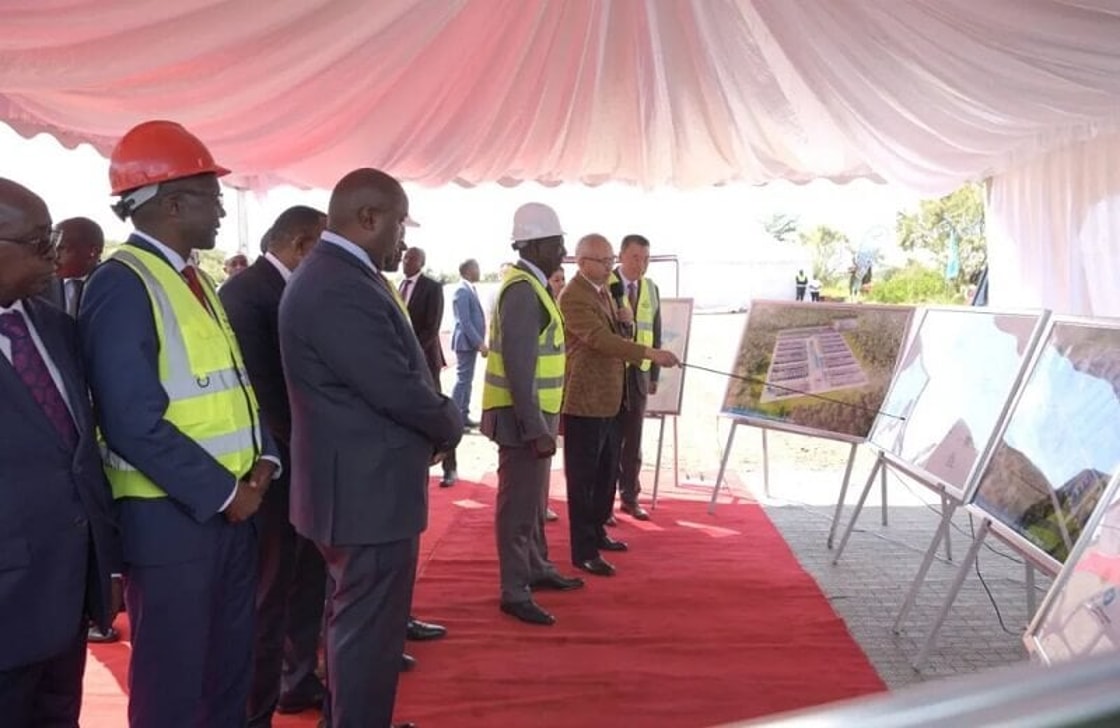
The electrolyser maker said 16 of its 1,000Nm3 per hour units – around 80MW in total –along with balance of plant systems, would be installed at the 480,000-tonne-per-year green fertiliser project in Olkaria.
The project is being developed by Chinese industrial and power firm Kaishan and entered construction last November.
Said to be Kenya’s “first” green ammonia project and its “largest” single industrial project, it will produce fertilisers for local agriculture.
It will use 165MW baseload geothermal energy to produce green hydrogen, which will be processed into ammonia, urea, and calcium ammonium nitrate. This will support the project’s initial phase, producing around 100,000 tonnes of ammonia.
Kaishan is also responsible for building the geothermal plant, which it claims will be the “world’s first” zero-emission geothermal power plant. Non-condensable gases from geothermal steam will be recovered to produce carbon dioxide for use in urea production.
Eventually, Kaishan intends to scale the project to produce 200,000 tonnes of green ammonia. H2 View estimates that between 200MW and 220MW will be required. This suggests either additional renewable capacity beyond the 165MW geothermal baseload or a phased project buildout.
The 80MW allocation suggests Sungrow is supplying roughly one-third to 40% of the project’s total electrolysis requirement. Kaishan has not revealed where it will source the other electrolysers.
The announcement comes after Sungrow Hydrogen revealed it had shipped alkaline and PEM systems to customers in Oman, Europe, and South America.
A subsidiary of Chinese solar PV major Sungrow, the electrolyser maker has been expanding its global presence in green hydrogen after an array of deals in its home market.
It reflects a wider move from Chinese firms, which in turn has sparked concerns from technology manufacturers in other regions.
According to estimates from the World Bank’s Energy Management Assistance Program (ESMPA), China currently holds 86% of global alkaline electrolyser manufacturing capacity.
This is also combined with a major cost advantage over Western manufacturers. ESMPA said alkaline stack-plus-balance of plant prices in China fell to about one-fourth to one-sixth of comparable prices in Europe.
Despite these low costs, the International Energy Agency estimated that once transport, tariffs, and local installation costs are factored in, the installed cost of Chinese electrolysers abroad approaches parity with Western systems.
Join the conversations shaping hydrogen
H2 View webinars bring together industry leaders to discuss the hottest topics and biggest trends.
With H2 View webinars, you’ll get:
• Insightful talks from global hydrogen experts
• Live debates, discussion, and audience Q&A
• On-demand access to every past webinar
Register for upcoming webinars or watch on demand