

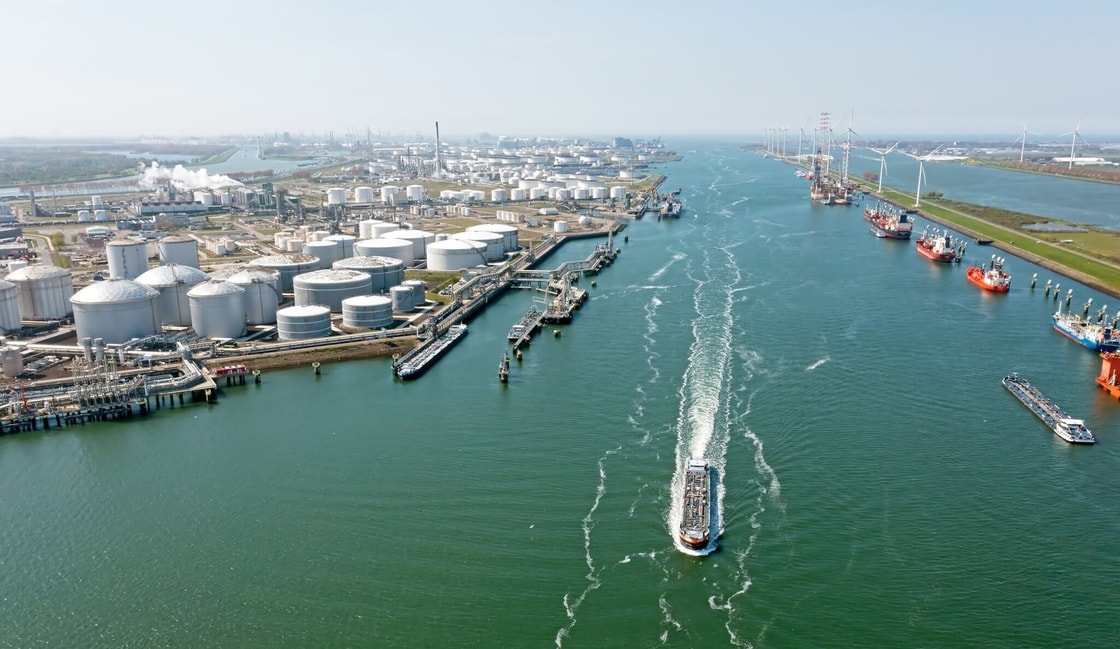
The consultation conducted by the Port of Rotterdam Authority found that at least nine companies are actively developing terminal concepts.
The Dutch port has long positioned itself as a major potential importer of clean hydrogen for Europe. In 2022, the authority outlined ambitions to supply up to 4.6 million tonnes of hydrogen per year to Europe by 2030.
However, the consultation revealed demand uncertainty, permitting, power grid congestion, and a lack of infrastructure in wider regions were hampering plans for terminals.
“The cost of such terminals quickly amounts to several hundred million euros, which is why companies want a degree of certainty that they can recover their investment,” the port authority said.
Demand uncertainty has hampered Europe’s clean hydrogen plans more broadly, with industry players citing strict regulatory requirements and slow policy implementation as key challenges.
With companies exploring plans to build terminals for ammonia, methanol, liquid hydrogen, and liquid organic hydrogen carriers in Rotterdam, the port said, “most companies expect that their potential terminal will not be operational until after 2030.”
Outside of policy, the authority said developers saw uncertainty for permits around nitrogen deposits after cracking ammonia, power grid congestion, and limited pipeline infrastructure to transport hydrogen from Rotterdam into key demand centres such as Germany.
The Delta Rhine Corridor is a 270km hydrogen and carbon dioxide pipeline network aiming to connect the Port of Rotterdam to Germany. Public consultations launched in 2025, with the network expected to be online by 2032.
The Port of Rotterdam said risks mentioned by participants have been “prioritised” and are being addressed by the authority and its partners.
Stay ahead with a H2 View subscription
Gain access to the insights, data, and analysis trusted by hydrogen professionals worldwide.
With a H2 View subscription, you get:
- Unlimited access to 15,000+ articles
- Monthly digital magazine + H2 Review
- Exclusive interviews, webinars and reports
- Expert analysis shaping the hydrogen conversation