

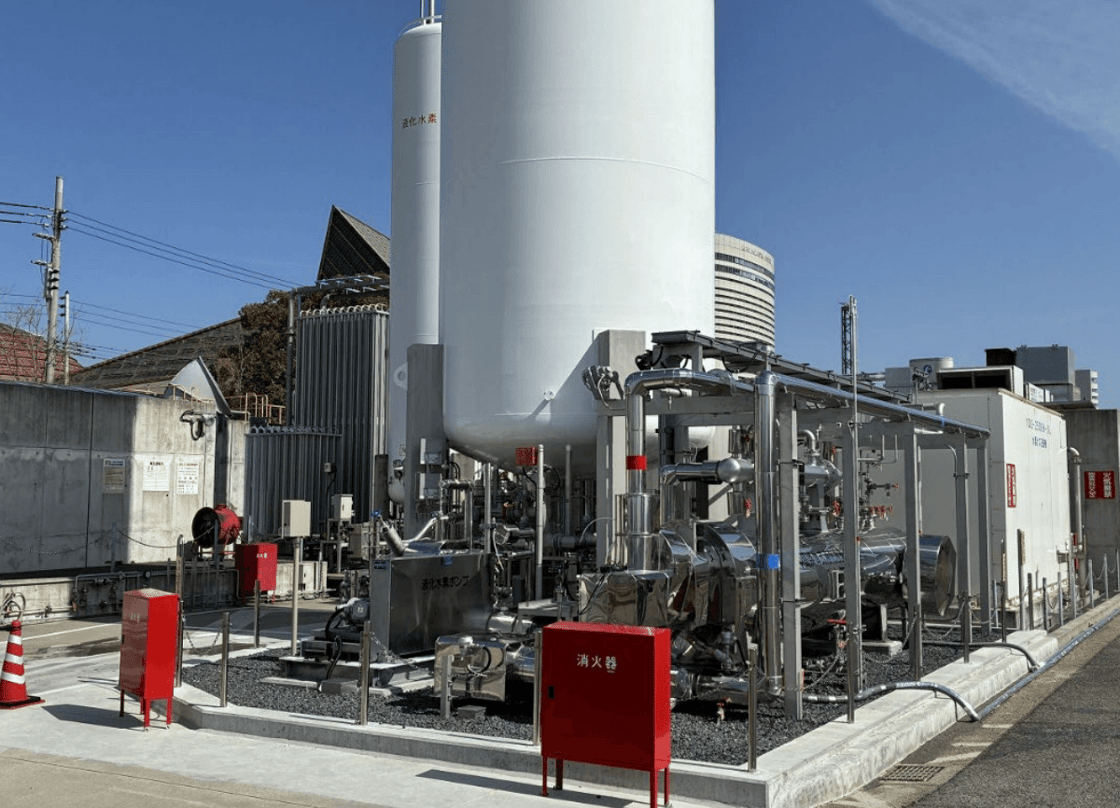
The demonstration facility, subsidised by Japan’s New Energy and Industrial Development Organisation (NEDO), uses a liquid hydrogen pump and an intermediate fluid vaporiser (IFV) to power a large-scale gas turbine.
The pair are using the project to advance the fuel system’s performance in a hydrogen cogeneration system, which uses hydrogen to produce heat and electricity.
Kawasaki is overseeing the hydrogen fuel supply system, while Kobe is developing the IFV, which uses energy derived from the cryogenic temperature of liquified hydrogen for separate applications like refrigerators and air conditioning.
In a statement, the duo said it is aiming to establish a hydrogen supply chain centred on liquid hydrogen to progress carbon-neutrality.
Japan has been accelerating efforts to secure large-scale, low-cost imported hydrogen from overseas producers to meet demand in applications like power generation.
In January, Kawasaki announced it will build what it says will be the “world’s largest” liquified hydrogen carrier vessel, with a capacity to carry 40,000m3.
While proponents say liquid hydrogen offers efficiency advantages over carriers like ammonia, critics argue that transporting it over long distances is technically complex, inefficient, and costly due to the extremely low temperatures.
Never miss a hydrogen headline
Hydrogen moves fast – stay on top of it with our daily and weekly briefings.
- Daily: The top five hydrogen stories, straight to your inbox
- Weekly: The week’s biggest news, features, interviews and analysis
- North American Bulletin: Dedicated coverage of the region’s key hydrogen developments