

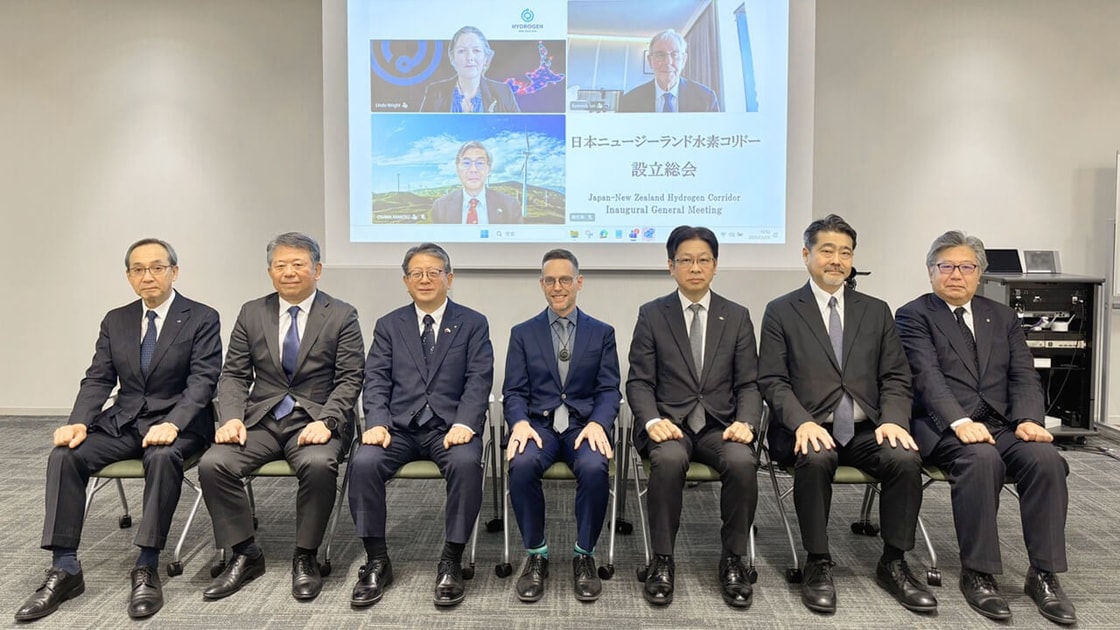
The consortium will explore meeting future green hydrogen demand from Japanese industry with molecules produced in New Zealand.
Mitsui OSK Lines, Obayashi Corporation, Chiyoda Corporation, and Kawasaki, said New Zealand’s renewable energy resources and strong trade relationship, as well as Japan’s own low energy self-sufficiency, are drivers for establishing the corridor.
In a statement, the consortium said that “the initiative aims for New Zealand to become a leading green hydrogen supply hub for Japan, contributing to carbon neutrality in Japan”.
In January 2025, Obayashi exported the first green hydrogen from New Zealand to a demonstration facility at Lautoka Port in Fiji.
However, New Zealand’s current green hydrogen production remains highly limited.
Last month, a 5MW plant in South Taranaki reached final investment decision – setting it on a path to become the largest in the country.
The country’s Hydrogen Action Plan foresees large-scale production, but few policies have been offered.
However, Japan has been increasing its focus on building up a supply of domestic and imported clean hydrogen to meet power and industrial decarbonisation goals.
Earlier this month, Kawasaki Heavy Industries said it would build the “world’s largest” liquefied hydrogen carrier vessel to supply its under-construction import terminal in Ogishima.
It is also seen as a key demand driver for global projects. The Hydrogen Council’s 2025 report grouped the country’s CfD and auction schemes as mechanisms that could help drive up to eight million tonnes of annual hydrogen demand by 2030.
Reach the global hydrogen audience
Put your brand at the heart of the hydrogen conversation. With H2 View, you can reach decision-makers and professionals across the global hydrogen value chain.
Our 2026 Media Guide shows how you can:
• Advertise across digital, print, and newsletters
• Connect with a highly engaged hydrogen audience
• Align your company with trusted industry coverage
Download H2 View’s Media Guide today