
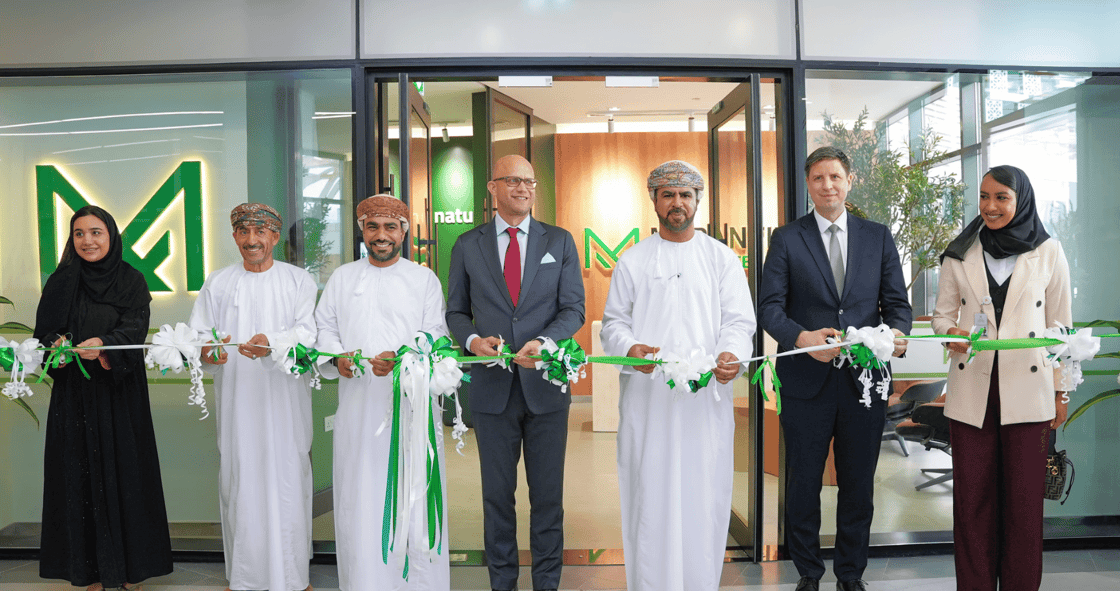
The Singapore-headquartered company held a ribbon-cutting ceremony at which it slated the new facility as a landmark for its expansion in the Middle East.
MGS plans to set up a 2.5 million-tonne-per-year (mtpa) hot briquetted iron (HBI) project in Oman’s Duqm industrial area, where it will use green hydrogen and natural gas to power a direct reduced iron process.
With plans to take FID on the project by the middle of this year, the company will gradually increase the amount of green hydrogen used in the process, in line with European carbon prices.
Having lined up offtake for all 2.5 mtpa of HBI, MGS is exploring plans to build a second production line in Duqm.
MGS says the office will reinforce its split production model, which separates ironmaking and steelmaking to “optimise costs, carbon efficiency, and supply chain resilience.”
Dr Sebastian Langendorf, CEO of MGS, said the Muscat office “is a statement of long-term commitment to Oman and to building a practical pathway for industrial decarbonisation.”
The company says by producing low-carbon iron in Oman – with supportive hydrogen policies, cheap natural gas, and abundant renewables potential – European steelmakers could decarbonise supply chains cost-effectively.
Meranti’s case for importing hydrogen-based iron
Despite setbacks for green hydrogen-based steelmaking in 2025, Singaporean newcomer Meranti Green Steel remains committed to making direct reduced iron (DRI) from the energy carrier.
Meranti Green Steel was formed in 2023 as the green steel platform of the Meranti Steel Group. The company has unveiled two projects aimed at cleaning up the steel value chain. One will produce up to 2.5 million tonnes per year (mtpa) of hot rolled coil in Thailand from scrap steel and hot briquetted iron (HBI) through electric arc furnace technology.
The other will see it deploy DRI technology in Oman, which could make up to 2.5 mtpa of HBI from a gradually increasing amount of green hydrogen as production ramps up in the Sultanate…
Click here to keep reading.