

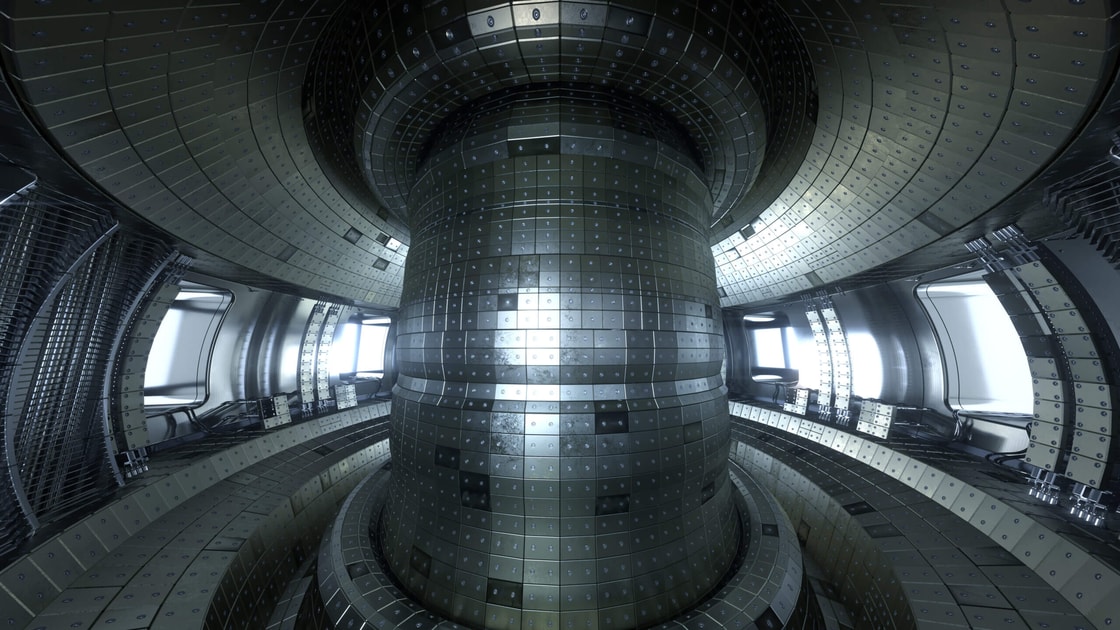
The company won a RMB 3.2m ($456,000) bid to join a project focusing on cryogenic systems for a “national-level fusion research platform” at the Institute of Plasma Physics, Hefei Institutes of Physical Science.
Guofuhee, which has been ramping up electrolyser activity, also makes hydrogen liquefaction equipment like gas coolers, expanders, and liquid hydrogen storage tanks.
While few details of its involvement in the fusion project have been revealed, the firm said the bid shows it had expanded its capabilities from hydrogen to “key components and systems integration of nuclear fusion at low temperature.”
Nuclear fusion is the process found in stars, where two different hydrogen isotopes are heated and forced together to make one heavier atom, which releases energy.
Following a breakthrough by US scientists in 2022, when they achieved a net energy gain for the first time in a laboratory fusion experiment, more research is being conducted to commercialise the technology.
With the use of hydrogen isotopes, deuterium and tritium – which must be stored, purified, circulated, and often cooled to cryogenic temperatures – fusion projects could benefit from existing hydrogen liquefaction capabilities.
Additionally, fusion reactors themselves require extreme cooling. Superconducting magnets need liquid helium and cryogenic systems, with vacuum and fuel injection systems also operating at very low temperatures.
Guofuhee said it could promote a “new revenue growth point” and unlock “synergies between hydrogen energy and nuclear fusion.”
Never miss a hydrogen headline
Hydrogen moves fast – stay on top of it with our daily and weekly briefings.
- Daily: The top five hydrogen stories, straight to your inbox
- Weekly: The week’s biggest news, features, interviews and analysis
- North American Bulletin: Dedicated coverage of the region’s key hydrogen developments