

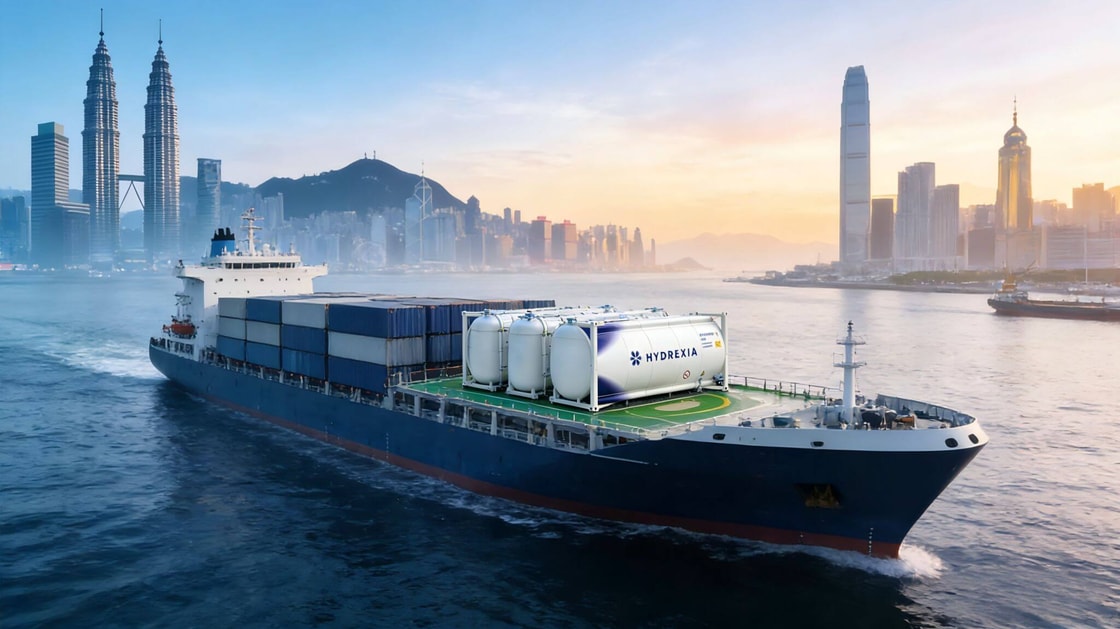
The “months-long” trial, which started in September 2025, saw Hydrexia’s MHX containers shipped to several seaports across Malaysia, Hong Kong, and Vietnam.
State-owned SEDC Energy was responsible for transporting the hydrogen, which was stored by absorbing it into a metal alloy. When heated or the pressure is lowered, hydrogen can be released from MHX as a gas.
Eliminating the need for high-pressure or cryogenic equipment, Hydrexia argues the technology offers a safe, modular hydrogen storage system.
Despite this, metal hydride solutions carry an efficiency penalty from the heat required to charge and discharge hydrogen. Charging typically requires temperatures of 200–300ºC, while releases need heat at around 350ºC.
The company’s Chairman and CEO, Alex Fang, said the trial had “significantly boosted the confidence of potential regional off-takers.”
“Positive responses and feedback from our regional collaborators have been overwhelming.”
The company previously told H2 View that the technology could help advance regional hydrogen trade in Asia before large-scale liquid hydrogen or carrier-based corridors exist.
SEDC CEO Robert Hardin said, “This initiative will open new market opportunities for Sarawak in the global hydrogen transport value chain.”
Last December, Hydrexia partnered with Chinese state-owned Sinopec and Baowu to test the MHX technology at “tonne-scale” in metallurgical processes.
Join the conversations shaping hydrogen
H2 View webinars bring together industry leaders to discuss the hottest topics and biggest trends.
With H2 View webinars, you’ll get:
• Insightful talks from global hydrogen experts
• Live debates, discussion, and audience Q&A
• On-demand access to every past webinar
Register for upcoming webinars or watch on demand