

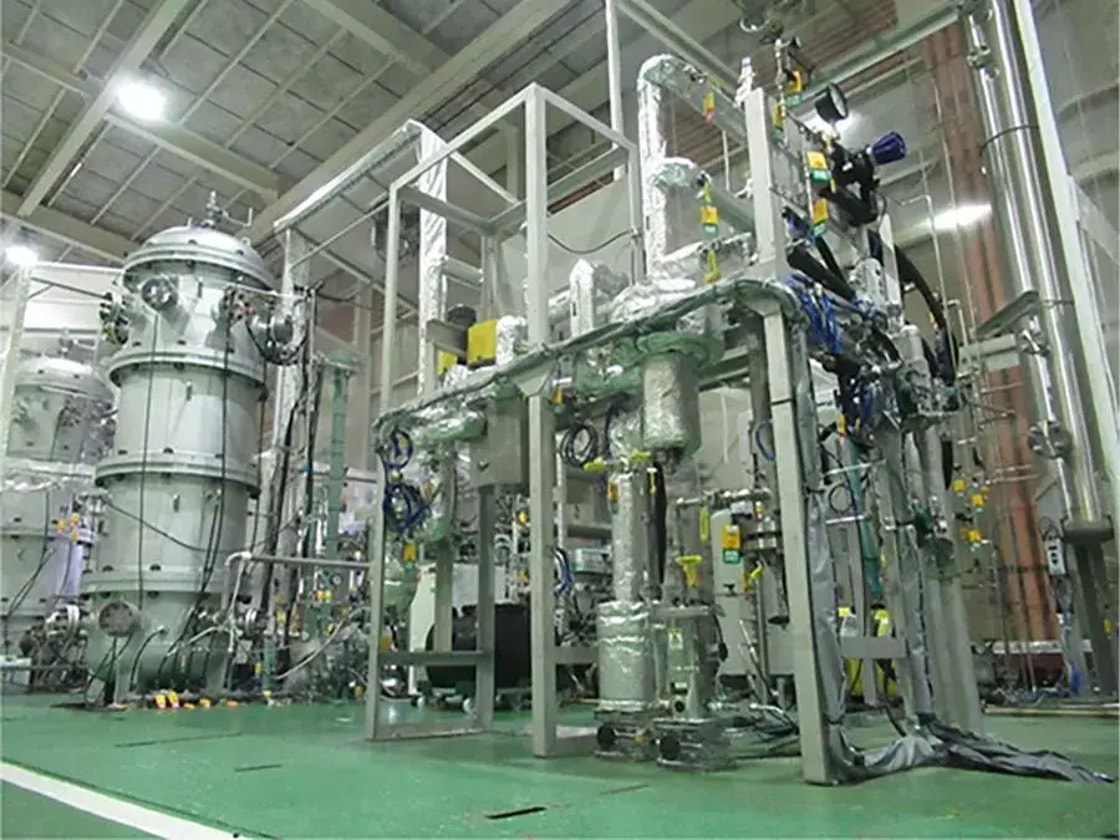
The engineering major demonstrated the use of hydrogen and carbon monoxide as a feedstock for the fuel, which it could be used in aircraft, ground vehicles, ships, and domestic gas.
The novel process uses solid oxide co-electrolysis to produce the feedstock and Fischer-Tropsch (FT) synthesis equipment to produce the liquid synthetic fuel.
Co-electrolysis combines hydrogen production and carbon dioxide conversion into a single electrochemical step, reducing system complexity and potentially improving efficiency.
MHI claims the product may be suitable for sustainable aviation fuel (SAF).
Under the Europe ReFuelEU Aviation legislation, aircraft fuel suppliers must ensure a 2% SAF blend, which will incrementally increase to a 70% share by 2050.
This, alongside International Civil Aviation Organization (ICAO) net-zero targets which MHI cited in an announcement, is forecast to significantly increase SAF demand worldwide.
SAF offers a pathway towards decarbonising the aviation industry; however, it faces multiple bottlenecks which could hinder its scalability.
Limited sustainable feedstock access, heavy reliance on policy support, and high production costs compared to conventional jet fuel add to long-term uncertainty in demand and investment confidence.
Never miss a hydrogen headline
Hydrogen moves fast – stay on top of it with our daily and weekly briefings.
- Daily: The top five hydrogen stories, straight to your inbox
- Weekly: The week’s biggest news, features, interviews and analysis
- North American Bulletin: Dedicated coverage of the region’s key hydrogen developments