

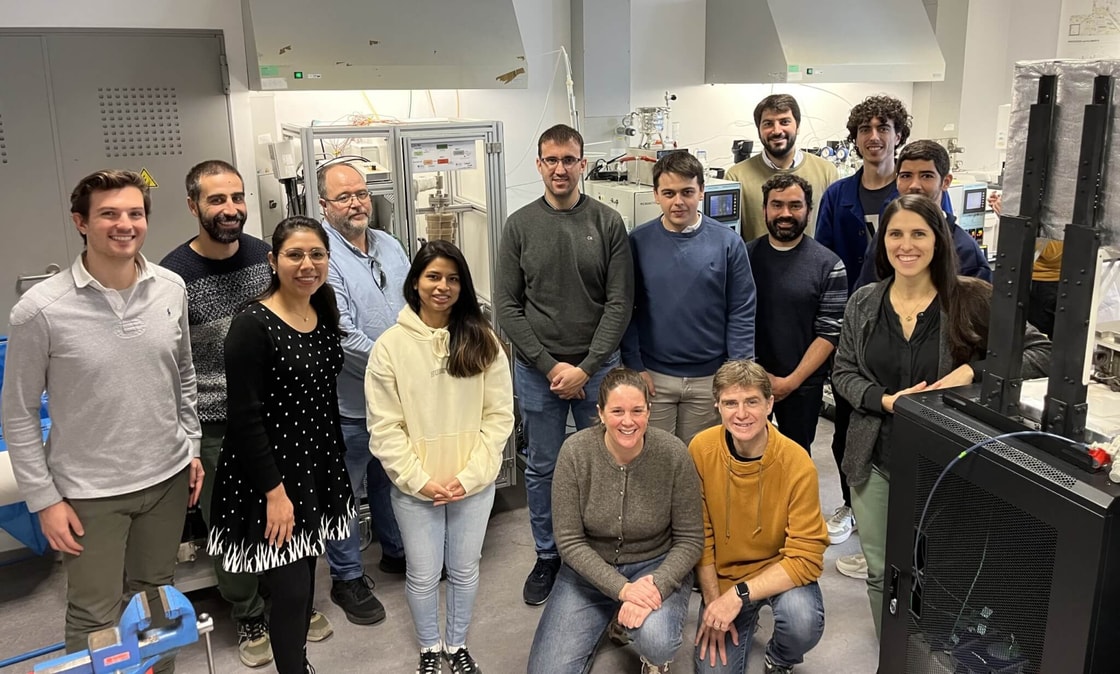
The Suport project, led by the Catalonia Institute for Energy Research (IREC), showcased a pilot-scale demonstration where wastewater and captured CO2 were converted into a synthetic fuel chemically equivalent to marine diesel.
The process used co-electrolysis to convert CO2 and wastewater into hydrogen-rich syngas, which was then put through Fischer–Tropsch synthesis to make the liquid fuel.
According to the researchers, integrating the two technologies into a single system improves overall efficiency compared to decoupled processes. Laboratory tests showed the system achieved carbon conversion rates of over 70%.
While the project’s scale was not revealed, IREC Project Coordinator, Lucile Bernadet, said the pilot showed the possibility of decarbonising sectors where direct electrification is not feasible.
“These fuels can be used in other types of engines, such as trucks,” she said. “We believe this is a key step towards accelerating the energy transition.”
Water utilities firms Aigües de Barcelona and Cetaqua supported the team by developing methods to recover hydrogen from organic matter and sludge generated by wastewater treatment plants.
Engineering research group, the International Centre for Numerical Methods in Engineering (CIMNE), conducted economic and environmental assessments, concluding that the technology is “viable and scalable.”
The Port of Barcelona also said the results of the trial aligned with its recently approved Energy Transition Plan.
Daniel Ruiz, Head of Sustainable Fuels at the Port of Barcelona, hailed the new fuel’s potential to advance decarbonisation in the maritime sector.
“The next challenge is to scale this technology to an industrial level,” he stressed.
The development comes as ship operators plan how they will comply with growing emissions reduction targets.
Despite delays to global carbon pricing under the International Maritime Organization, the EU has imposed its targets.
Under FuelEU Maritime, ships over 5,000 GT docking at EU ports face greenhouse gas intensity limits, while the bloc’s emissions trading scheme was expanded to cover internal voyages in 2024.
While hydrogen-based fuels like green ammonia and e-methanol have been positioned as solutions, their potential high cost, lack of available infrastructure, and need for new engine technologies have slowed progress.
Stay ahead with a H2 View subscription
Gain access to the insights, data, and analysis trusted by hydrogen professionals worldwide.
With a H2 View subscription, you get:
- Unlimited access to 15,000+ articles
- Monthly digital magazine + H2 Review
- Exclusive interviews, webinars and reports
- Expert analysis shaping the hydrogen conversation