

The declaration will be signed by energy ministers from the UK, Belgium, Denmark, France, Germany, Iceland, Ireland, Luxembourg, the Netherlands and Norway.
The declaration emphasises building international markets, ensuring secure supply chains, and setting standards for hydrogen-based technologies.
Specific areas of collaboration include the development of green shipping corridors, research and development, knowledge sharing and capacity building, and economic and financial partnership.
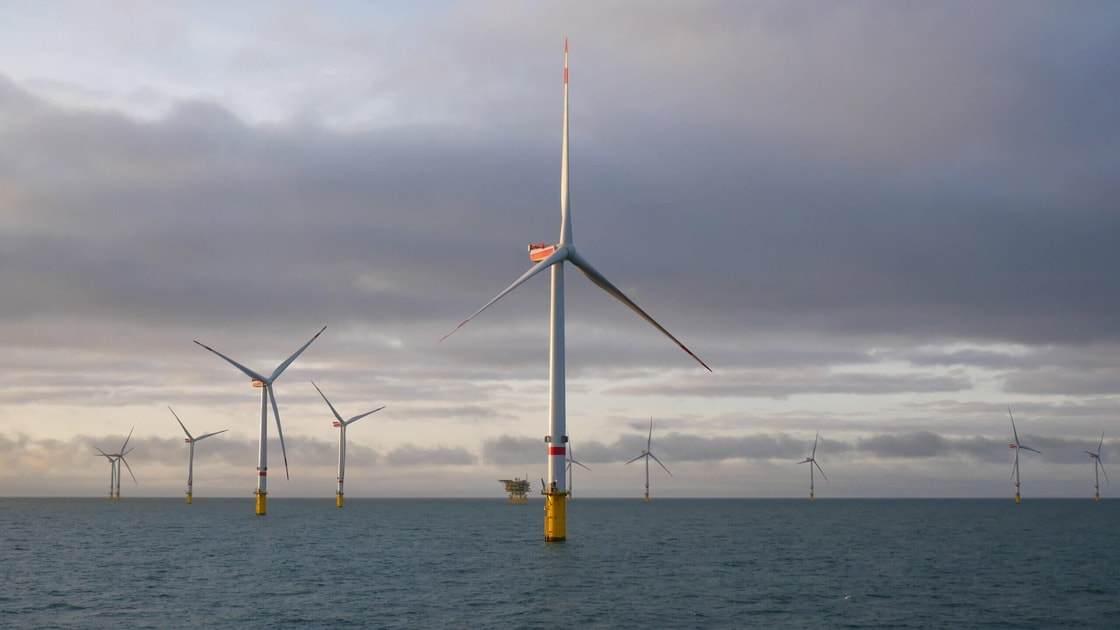
A key element will see the construction of an offshore wind power grid in the North Sea.
Nick Mabey, CEO of European climate change think tank E3G, said the announcement represents a turning point in the development of offshore wind.
“Its security and economic resilience opportunity for all countries involved make it an important tool in an increasingly unstable world,” he said.
It comes at a critical time for the decarbonisation of shipping and aviation, which face increasing mandates to transition to cleaner fuels.
Under the EU’s ReFuelEu Aviation and Maritime laws, fuel suppliers will need to introduce green hydrogen-based fuels incrementally. However, development remains slow.
Despite record levels of investment in clean energy, speakers at the World Economic Forum in Davos last week warned that the global energy transition is being slowed less by a lack of capital than by how that capital is deployed.
Around two-thirds of global energy investment is now directed towards clean energy, much of it renewable. The funding is largely available, yet progress remains uneven across regions, raising questions over whether investment is reaching the parts of the energy system most in need.
While there has been notable progress in the development of e-fuels, producing them remains more expensive than fossil fuel refining, primarily due to the cost of renewable electricity, electrolysis and CO₂ capture.