

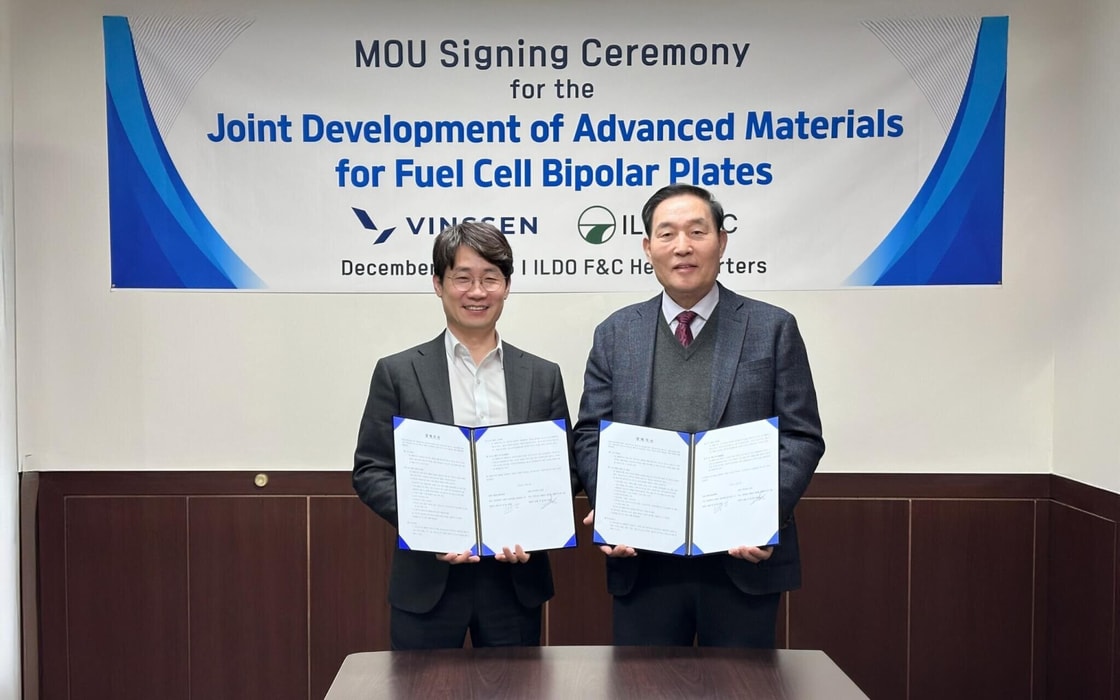
Under the deal with ILDO F&C, the duo aims to deliver composite-based lightweight bipolar plates with high corrosion resistance, long-term durability, and customisable surface options, without the need for conductive coatings.
Bipolar plates in fuel cells distribute hydrogen and oxygen, conduct electricity and manage heat and water by-products. Typically, they are made from metal sheets with channels machined or etched on.
However, the pair claim composite plates could deliver “lower tooling costs, enhanced operability through hydrophilic/hydrophobic options, resistance to degradation caused by metal-ion leaching, and weight reduction.”
Vinssen has been focused on developing fuel cell propulsion systems for maritime applications based on PEM technologies.
It is currently constructing a 17.4m leisure vessel that will be powered by a 600kW fuel cell and battery system. It also recently secured an approval in principle for a fuel cell tugboat design.
However, the firm’s CEO Chilhan Lee, said the partnership could help it extend its role beyond marine applications into aviation and power-to-X industries.