

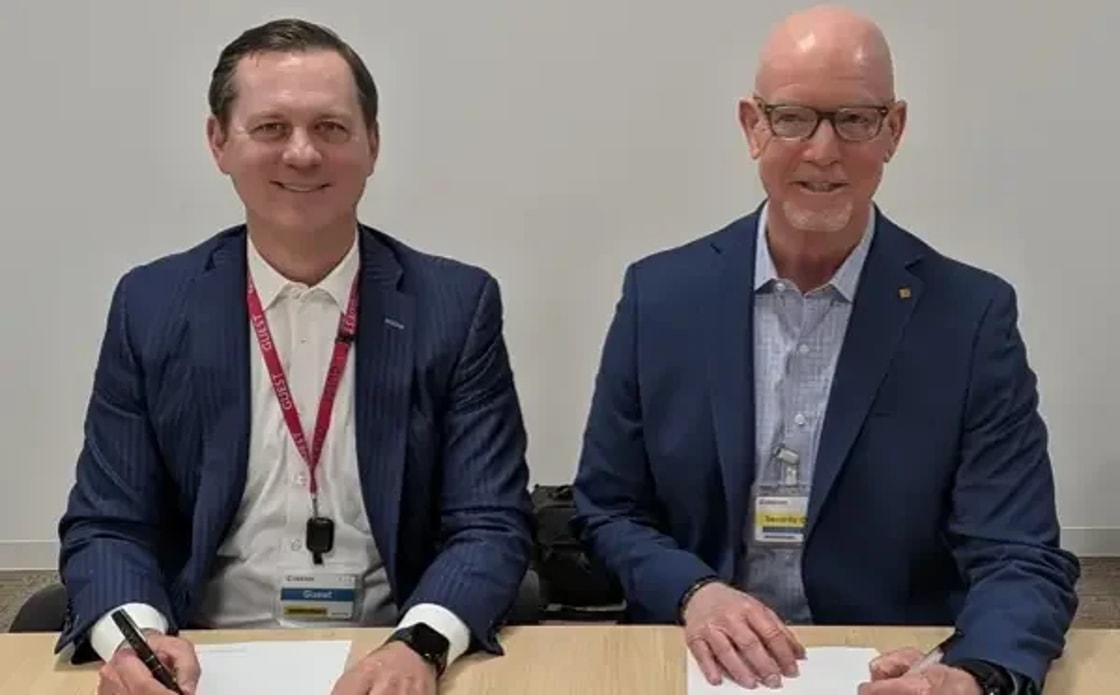
The memorandum of understanding (MOU) will see Kyocera International explore producing Utility’s ceramic-metal electrochemical cell technology within in global manufacturing footprint in a bid to speed up time-to-market.
The partnership aims to establish “high-volume” production lines, with initial plans of bringing capacity online in 2026 at Kyocera’s Fine Ceramics manufacturing facility in North Carolina, US.
Additional sites could be expanded globally if demand for the technology grows.
Utility’s H2Gen tech can take low-pressure steam and pre-treated industrial off-gases to produce hydrogen at 95% purity, alongside high-purity CO2.
It uses thousands of cermet tubes coated with functional layers, which hold steam inside and off-gas on the outside.
“By pairing our breakthrough materials technology, ceramic-metal manufacturing and coating know-how with Kyocera’s proven manufacturing excellence and global presence… we can jointly meet our accelerating demand for H2Gen systems,” said Utility CEO Parker Meeks.
For Utility, it will offer a low-cost manufacturing scale-up. The firm has been ramping up deals to deploy its technology in a wide array of applications. It’s exploring deploying a system at ArcelorMittal’s steel plant in Brazil, alongside biogas-to-hydrogen developments in Asia.
Jeff Osmun, Vice-President of Kyocera Fine Ceramics Group, said the collaboration would provide “high performance, high quality” cells for Utility.
Utility Global pitches hydrogen tech as the missing link for CO2 capture
Most hydrogen technology firms lead with the promise of clean fuel. Utility Global starts with carbon dioxide (CO2) and the liabilities it helps solve.
“In industries like steel, refining, and chemicals, most of our customers see us as much as a CO2 concentration technology, as a hydrogen production technology,” CEO Parker Meeks told H2 View.
That’s because the company’s H2Gen technology, which uses industrial off-gases to make hydrogen from water, also generates CO2 at concentrations that can exceed 70% – something experts claim could slash the cost and energy demand of carbon capture.
To be clear, Utility’s system does not include carbon capture. That is left to the customer and their technology choices. This, Meeks says, opens up more opportunities for CO2 use, not just storage…
Click here to keep reading.