
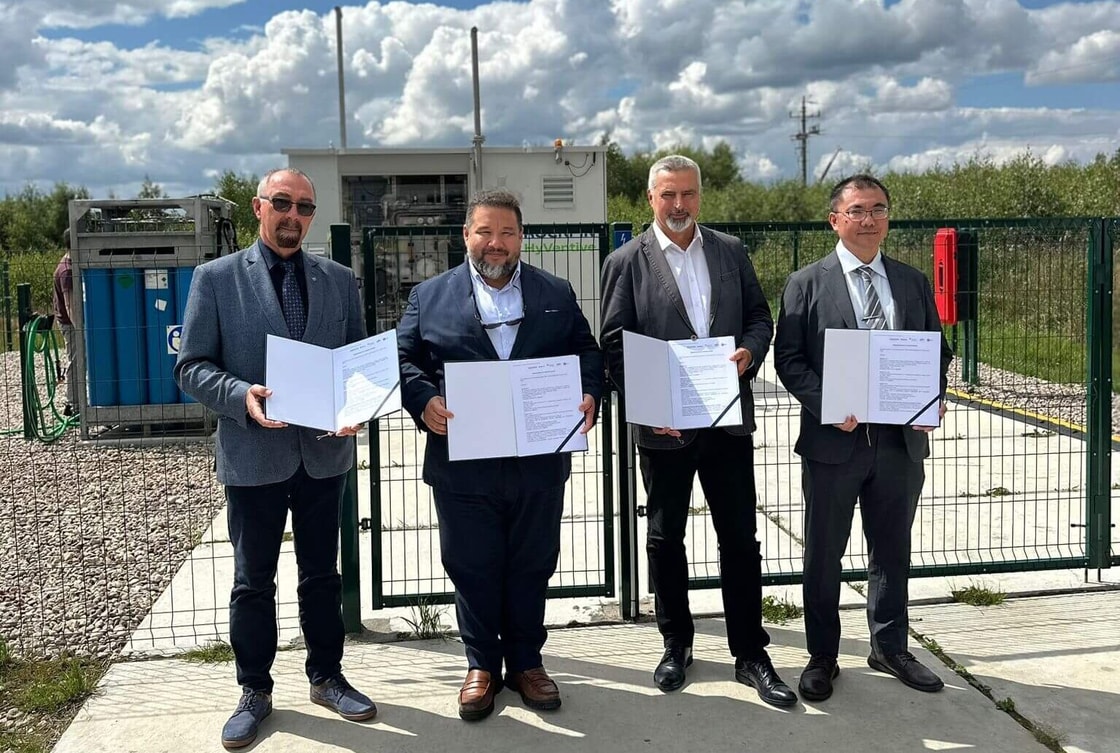
Starting in early 2026, the demonstrator will produce high-efficiency green hydrogen for low-carbon ammonia synthesis, using waste heat from the Haber–Bosch process to power the SOEC in a closed-loop system.
Hynfra CEO Tomoho Umeda said operating at 700–900°C enables the capture and reuse of heat from ammonia synthesis, delivering high efficiencies.
Under the MOU, the partners also plan to build a larger SOEC-based, megawatt-scale hydrogen facility to supply green hydrogen to industrial chemical and fertiliser plants worldwide.
Umeda said, “This is a decisive step toward making green hydrogen a practical, scalable solution for the chemical and fertiliser industries, while keeping production costs competitive in a Net Zero economy.”
Hynfra noted that on-site hydrogen production with its planned SOEC units will maximise efficiency, but large-scale deployment will demand renewable energy installations or substantial green power secured through PPAs to maintain a low-carbon footprint.
The project brings together each partner’s expertise. The Łukasiewicz Research Network New Chemical Syntheses Institute (INS) for chemical process know-how, and Rockfin for hydraulic systems and modular industrial installations.
Meanwhile, Niterra will supply SOEC stacks and components, and Hynfra will handle development, engineering, financing, and market integration.
While the project aims to demonstrate the technology’s potential, SOEC remains a nascent technology, with no large-scale electrolysers currently in operation globally.