
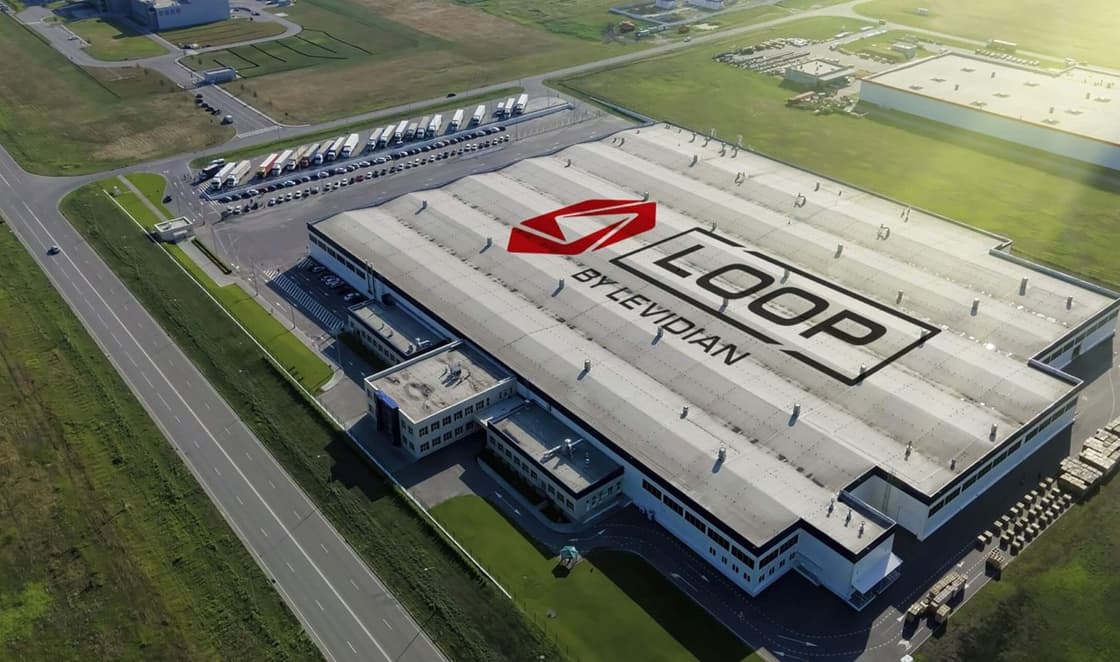
The first industrial-scale unit has been deployed at its headquarters in Cambridge, the UK, expected to spearhead Levidian’s plan to produce thousands of tonnes of high-quality graphene by applying microwave energy to crack methane into its component parts.
This ultimately creates clean hydrogen and captured carbon in the form of graphene. H2 View understands that a single nozzle will be capable of producing around 15 tonnes of graphene a year, offering hard-to-abate industries, such as landfill and aluminium producers, a route to decarbonise processes and open up new revenue streams from the produced graphene and hydrogen.
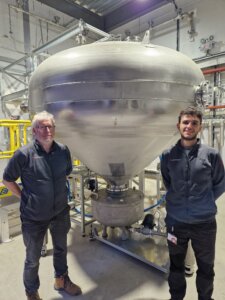
Second generation LOOP © Levidian
Overall, the UK-based company wants to produce 50,000 tonnes of graphene by 2030 from its planned network of LOOP devices. There are currently 10 LOOP’s deployed or under construction globally.
“We believe that graphene is going to play a central role in helping the world’s most carbon-intensive businesses to decarbonise, solving the business case on decarbonisation projects thanks to its short return on investment, and delivering performance improvements on just about every product it touches,” explained John Hartley, Levidian CEO.
“With this latest technology release, we’re setting graphene on a pathway to the mainstream, putting all the old issues of quality and scale aside to deliver unparalleled levels of graphene production that is less carbon intensive, more affordable and a higher quality than anything else on the market today.”
Chief Technology Officer, Alistair Donaldson, added, “Over the last year, our team has been relentlessly focused on driving forward the design of the nozzle, delivering a 20 times uplift in gas processing and graphene production, and finding opportunities to scale our technology alongside growing customer demand.”
Levidian plans to deploy its first industrial LOOP at a customer site in partnership with Hexla next year. Earlier this year, the two companies agreed to use the hydrogen production technology at the home of Glastonbury Festival, Worthy Farm.
Read more: Glastonbury farm to utilise methane-to-hydrogen technology
Levidian: Producing hydrogen within a full circular economy
With more than two billion metric tonnes of municipal solid waste generated worldwide every year according to statista¹, innovators are beginning to consider landfill as an opportunity as opposed to a greenhouse gas (GHG) threat.
Expected to increase by around 70% by 2050 to 3.4 billion tonnes², the release of methane into the atmosphere will also increase, methane being much more potent as a greenhouse gas than carbon dioxide (CO2) over a 100-year period.
However, by managing the waste and coupling it with technologies that can capture and utilise methane, the harmful gas can be used as a valuable resource whilst also having its environmental impact mitigated.
One example of this is UK-based company, Levidian, and its methane-to-hydrogen and graphene technology, known as LOOP. The process uses methane as a feedstock to produce both hydrogen and Net Zero graphene.
Continue reading here.