

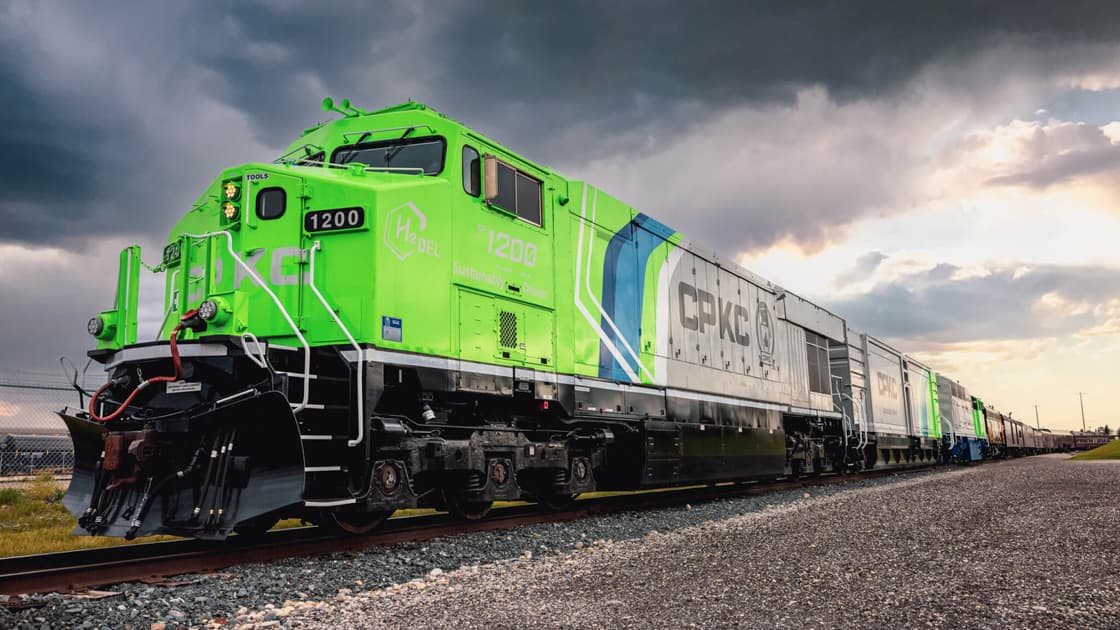
Each boasting a 1MW electrolyser, compression, storage and dispensing systems, the Calgary installation is using renewable power from CPKC’s existing 5MW solar farm to power electrolysis.
CPKC has ordered a total of 40 200kW fuel cells from Ballard which it has been using to retrofit locomotives in a bid to cut its emissions.
Read more: Canadian Pacific orders an additional 2.4MW of Ballard’s fuel cell engines
The two new facilities are expected to serve as a model for future complementary projects across Canada, according to CPKC and ATCO.
Mark Brown, Executive Vice-President of Projects and Operations at ATCO, stressed, “This advancement marks significant progress in utilising hydrogen as a fuel source for commercial transportation and reflects ATCO EnPower’s commitment to building a sustainable future by providing innovative energy solutions for our customers.”
“These fuelling facilities are an important part of advancing the ongoing testing of our hydrogen locomotives and advancing the development of our industry-leading programme working toward a lower carbon transportation future,” added Kyle Mulligan, CPKC Assistant Vice-President Operations Technology.
CPKC has been pursuing hydrogen-powered locomotives since 2020.
Having launched its first prototype in 2021, last year, the firm announced plans to expand its retrofitting programme.
Hydrogen’s central position in Alstom’s rail innovation
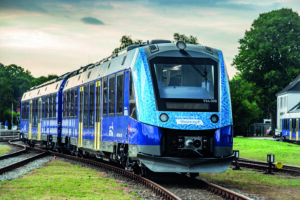
© Alstom
Across the recent flurry of hydrogen-powered train announcements in both North America and Europe, there is one name that makes a regular appearance: Alstom.
The French rolling stock manufacturer, founded in 1928, despite being active in the fields of passenger transportation, signalling, as well as locomotives, has made itself synonymous with the clean rail mobility transition.
The company is looking to revolutionise is product offering, targeting a 40% reduction of absolute Scope 1&2 greenhouse gas (GHG) emissions; a 42% reduction per passenger kilometre of Scope 3 GHG emissions from the use of its sold products covering rolling stock; and a 35% reduction per tonne-kilometre of Scope 3 GHG emissions from use of sold products covering freight, all by its full-year 2030/31…
Click here to keep reading.